


VALD technology is used around the world in high-performance centers to measure strength, power, movement, and asymmetries. At St. Pete Physical Therapy, we use VALD’s industry-leading force-plate and dynamometry technology so your plan of care is built on real data, not just how you feel on a given day.
Who Can Benefit from VALD Performance Testing?
VALD testing isn’t just for elite athletes. We build it into plans of care whenever objective data helps guide recovery or performance, including:
- Anyone recovering from an orthopedic, musculoskeletal, or sports injury
- Post-surgical patients, including ACL and other knee surgery, meniscus repair, shoulder surgery, rotator cuff repair, shoulder or hip labral repair, core muscle repair, and Achilles repair
- Athletes with a muscle or tendon strain, such as the quadriceps, hamstring, forearm, biceps, glutes, or calf
- Athletes with a ligament sprain, including high ankle sprains, MCL/LCL sprains, and AC joint sprains
- Teams preparing for pre-season screening, so baseline data is on hand if an injury happens
Why Objective Testing Matters
With VALD technology, we can:
- Measure strength, power, and balance precisely in numbers, not just “better” or “worse”
- Detect asymmetries between limbs that may not be obvious during a standard exam
- Track your progress over time so you can see exactly how your treatment plan is working
- Make safer return-to-sport and return-to-work decisions using objective thresholds rather than guesswork
This data-driven approach helps us design smarter treatment plans and gives you clear feedback about your recovery.
What Sets Our VALD Testing Apart
- No guesswork on left-right differences: we quantify asymmetries instead of relying on a subjective exam
- Advanced technology: precise force-plate and dynamometry data with detailed analysis
- An athlete-centered approach: your results are compared to normative data based on your age, gender, and sport
- Expert analysis: our physical therapists translate your numbers into an actionable roadmap
- Retesting built in: we re-measure at key points in your plan of care to track real improvement
What Does VALD Technology Measure?
- Strength output, including max force, average force, and force at a specific time interval, plus asymmetries between your left and right side
- Rate of force development, or how quickly you can produce force, and left-right asymmetries
- Jump height across squat jumps, countermovement jumps, single- and double-leg jumps, hops, and depth jumps
- Contraction time during jumping and hop testing
- Landing force absorption and asymmetries between your left and right side
- Balance
- Range of motion
Muscle Groups & Common VALD Tests
Almost every major muscle group used in athletic performance can be tested, including the quadriceps, hamstrings, hip flexors, hip abductors, hip adductors, hip extensors, calves, shoulder internal and external rotators, biceps, triceps, and grip strength.
Frequently used VALD tests include:
- Force development testing (max and average force) for the quadriceps, hamstrings, hip musculature, calves, and rotator cuff muscles
- Squat assessment
- Jump assessments, including squat jump, countermovement jump, single-leg countermovement jump, and double- or single-leg hop testing
- Landing assessments, including double-leg land and hold, single-leg land and hold, drop jump, and single-leg drop jump
- Isometric mid-thigh pull

The VALD Equipment We Use
We use three complementary VALD tools, each suited to a different type of test:
- ForceFrame: isolated strength testing for knee and ACL rehab, hip and groin injuries, and shoulder and upper-extremity strength
- ForceDecks: dual force plates that measure jump performance, landing forces, balance, and load distribution between your legs, especially useful for post-surgical lower-extremity rehab and return to running, jumping, or change-of-direction sports
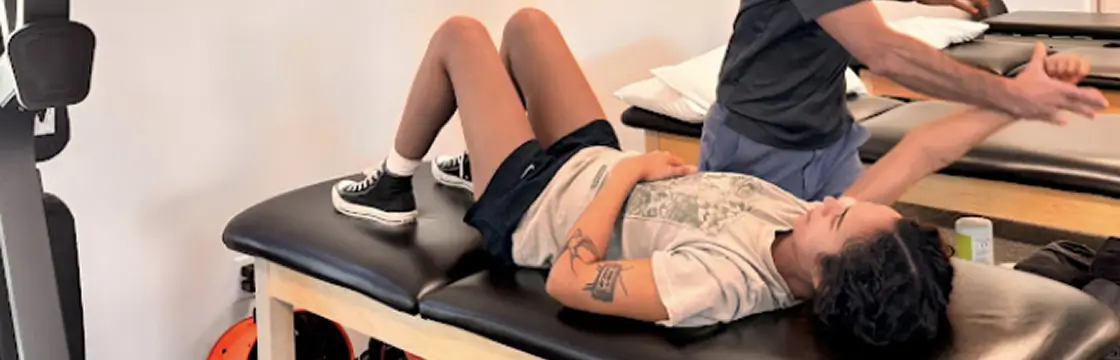
- Dynamo: handheld dynamometry for range of motion, grip strength, and manual muscle testing when ForceFrame positioning isn’t appropriate, such as early after surgery
How We Use Your Data
Data only matters if it changes what we do. Your VALD results are built directly into your plan of care. We use your measurements to:
- Set specific, measurable goals for your recovery or performance
- Adjust your program when progress slows or you’re ready to advance
- Communicate clearly with your physician or other providers by sharing objective results
- Support safer return-to-sport and return-to-work decisions
Over time, we compare your results to your own baseline and to side-to-side differences to build a clear picture of your progress.
VALD Performance Testing FAQs
Does VALD testing hurt or feel like a hard workout?
Do I need to be an athlete or have a referral to be tested?
How often will I be retested?
Ready to Test Smarter?
See exactly where you stand before you decide what’s next.
You don’t have to guess at your strength, symmetry, or readiness. We’ll build your VALD results into a plan of care around your goals.