
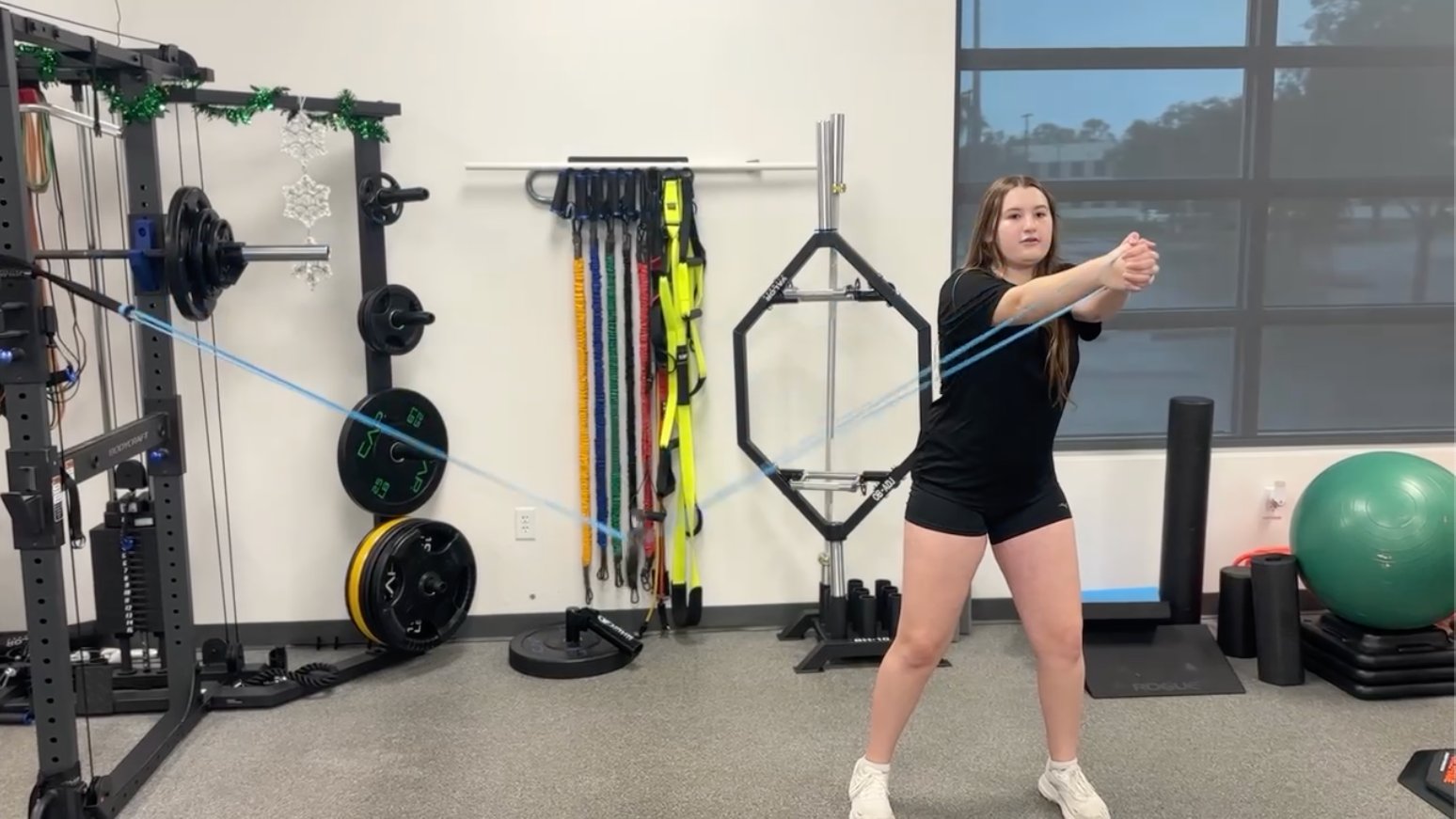
Performance Physical Therapy for Spondylolysis and Spondylolisthesis
At St. Pete Physical Therapy, we help young athletes calm lower-back pain from spondylolysis and spondylolisthesis and get back to their sport with a strong, stable spine. These are among the most common causes of persistent back pain in growing athletes. Our physical therapy for spondylolysis and spondylolisthesis in St. Petersburg, FL looks at how the lower back, core, and hips share load during real athletic movement.
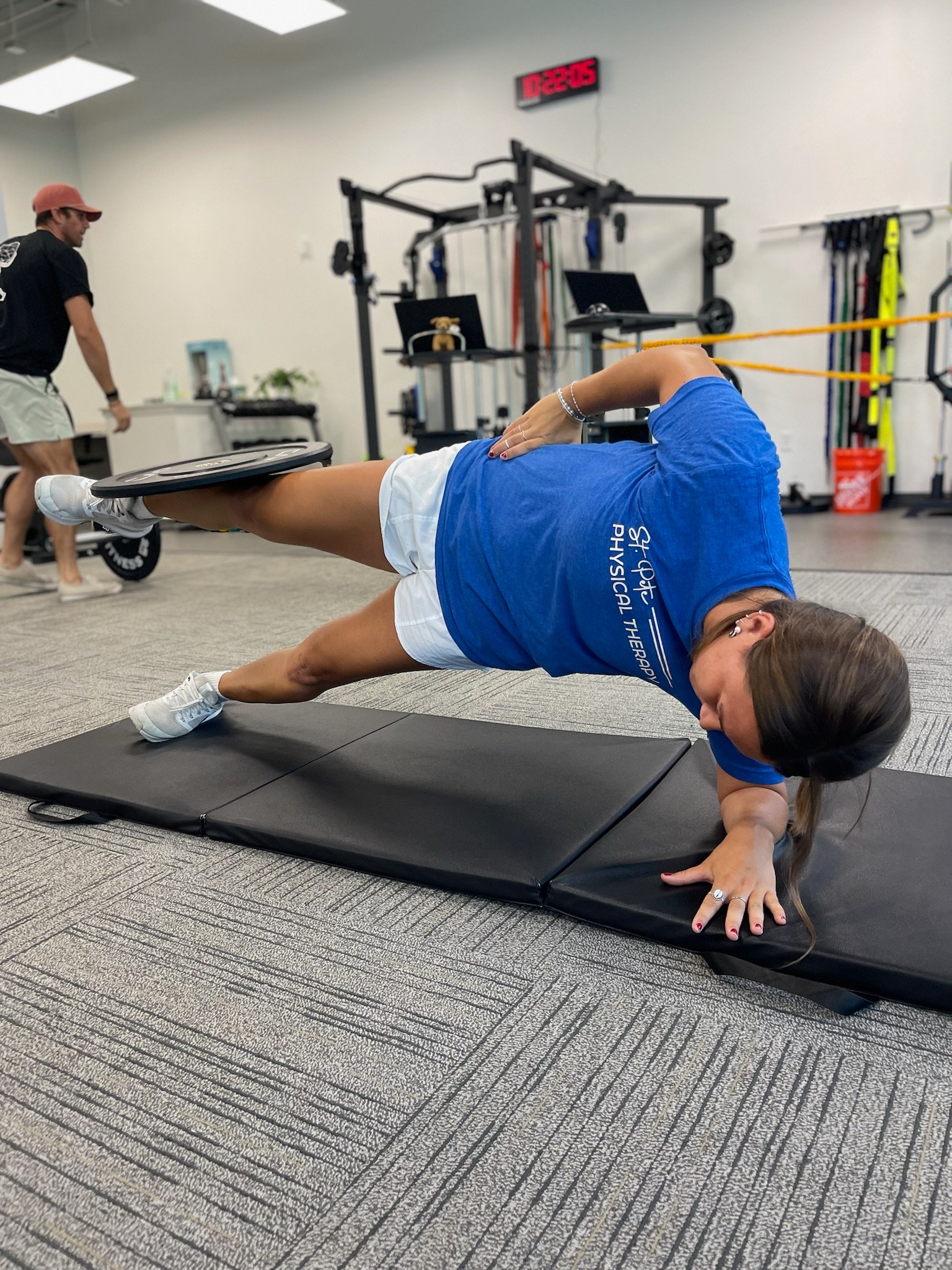
Repeated back-arching and heavy loading can create a small stress fracture in the spine, and sometimes let one vertebra slip forward on the one below it. We don’t rely on rest alone. We treat this as a stability problem: settle the irritated area, build deep core control, and retrain movement so the spine is protected under load. The goal is lasting back health and a confident return to your sport.
Understanding Spinal Stress and Vertebral Slipping
Spondylolysis is a stress reaction or fracture in a small bony bridge of the lower spine (the pars). Spondylolisthesis is when that weak spot lets a vertebra shift forward. These conditions show up most in young gymnasts, dancers, football players, volleyball players, and track athletes — especially during the growth years, when repeated back-arching under load meets a still-maturing spine. Adults can develop them too; for the grown-athlete approach, our Spine Injury Recovery page is the better fit.
Young athletes seek us out when they have deep lower-back stiffness, stubborn hamstring tightness, or pain when bending backward, reaching overhead, or landing from jumps. The goal is to catch it early, protect the healing bone, and rebuild the core and hip control that keep the spine stable.
When to Get Your Lower Back Evaluated
Catching spinal stress early keeps a stress reaction from growing or a vertebra from slipping further. An evaluation shows how the hips, pelvis, and trunk work together during movement — and where force is concentrating on the spine. Book one if you’re:
- Dealing with ongoing lower-back stiffness or deep pain during or after workouts.
- Getting sharp pain when arching back, reaching overhead, or landing from a jump.
- Fighting chronic hamstring tightness that stretching doesn’t fix.
- Noticing pelvic instability or changes in your running mechanics with high-volume training.
- Coming back from a diagnosed lumbar stress fracture and needing a safe return-to-play plan.
- Feeling trunk weakness or fatigue with heavy lifts or rotational movements.
How We Treat Spondylolysis and Spondylolisthesis
Different sports load the spine in different ways, but the fixes share a foundation: a stable, well-controlled trunk and mobile hips. Our targeted work includes:
- Deep Core and Trunk Stability: strengthening the deep abdominal muscles, multifidus, and pelvic floor to build a strong internal brace for the lower back.
- Hip Mobility: restoring hip range of motion so the lower back doesn’t have to compensate when you bend or extend.
- Pelvic Alignment: building glute strength and hamstring capacity to hold a neutral pelvis under load.
- Technique Retraining: adjusting lifting form, landing mechanics, and athletic posture so impact spreads through the whole chain instead of the spine.
Our Approach, Step by Step
We begin by measuring lumbar motion, hip-flexor length, single-leg control, and core strength — so the plan is built on real numbers, not guesswork. From there we keep your legs and conditioning sharp while the bone heals, and progress only as your spine tolerates it. A typical program includes:
- Whole-chain movement checks to correct the compensations overloading the low back.
- Anti-extension core drills that train the trunk to resist excessive arching.
- Glute and posterior-chain strengthening for pelvic control and shock absorption.
- Mobility work for the upper back and hips to restore smooth, full-body movement.
- Sport-specific retraining so the spine stays protected during fast play.
- An activity plan that keeps you fit without overloading the spine.
Why Athletes Choose St. Pete Physical Therapy for Spinal Care
Our specialists work like performance consultants for growing athletes. Every progression is backed by what we measure, and we keep athletes, parents, and coaches on the same page about the plan and the timeline — which, with the spine, means being honest that bone takes time.
- Every step guided by measured movement data.
- A focus on building a spine that’s stable and durable, not just pain-free.
- Clear progress markers you can watch improve.
- Loading limits designed to protect the healing bone.
Your First Visit
Your first visit starts with your training history, sport demands, and symptoms. We then assess joint mobility, trunk strength, and movement quality to pinpoint the stress. Together we build a clear plan with real targets for stability and power, and you’ll leave with an active program to start right away.
Rebuild a Strong, Stable Spine
If lower-back stiffness or lumbar stress is holding you back, an evaluation is the right next step. At St. Pete Physical Therapy, we’ll settle the irritated area, build the core and hip control that protect it, and guide a safe return to your sport. Contact St. Pete Physical Therapy today to schedule an evaluation for spondylolysis and spondylolisthesis physical therapy.
Spondylolysis & Spondylolisthesis FAQs
Can therapy resolve spondylolysis back pain without stopping all activity?
How is spondylolysis different from a back muscle strain?
How long until I can return to high-level sport after a pars stress fracture?
Ready to Move Better ?
Whether you are recovering or training, your next step starts here.
You don’t have to figure this out alone. We will build a plan around your goals so you can get back to doing what you love with confidence.