
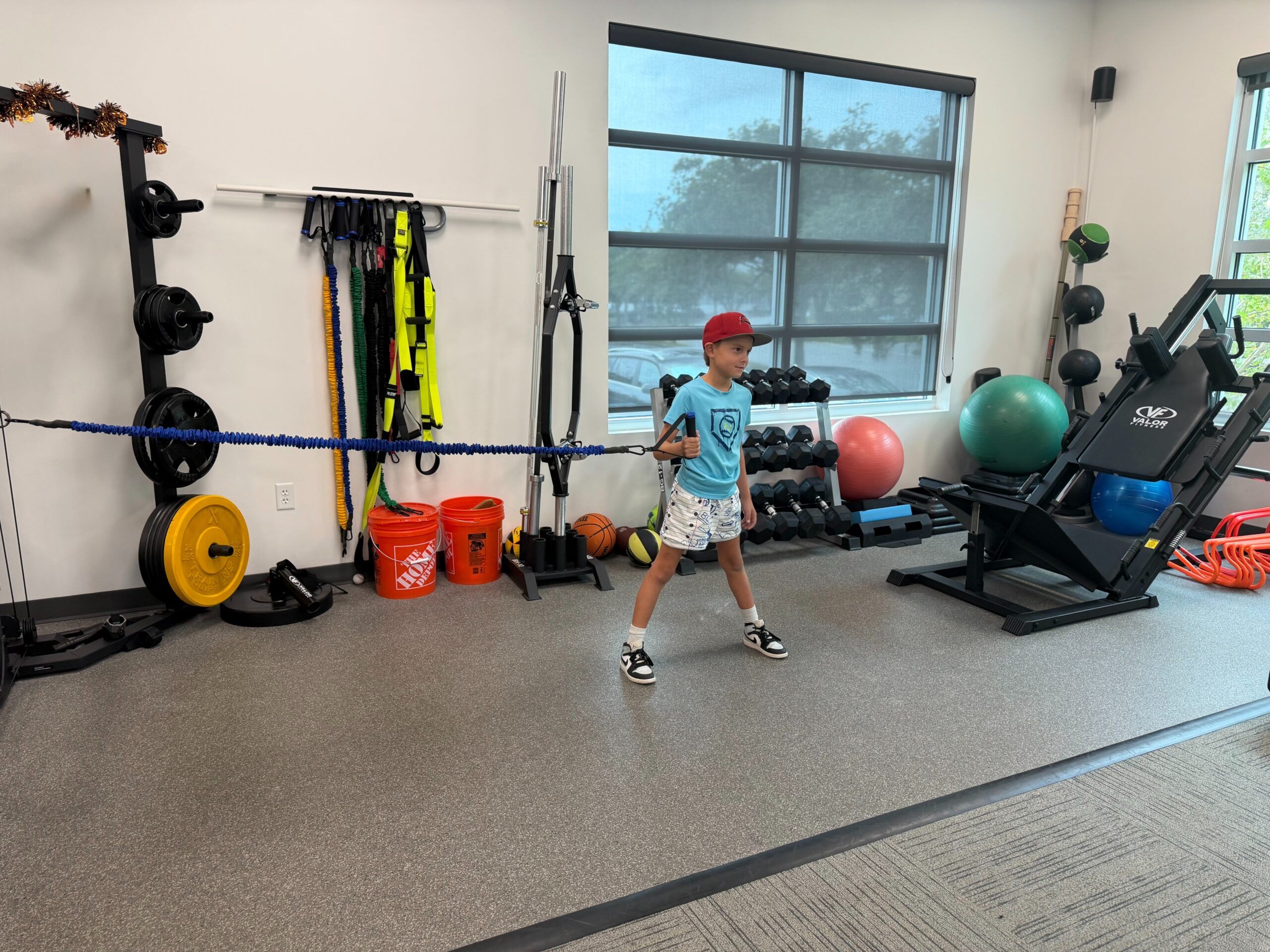
Performance Physical Therapy for Little League Elbow & Shoulder
At St. Pete Physical Therapy, we help young throwers quiet down elbow and shoulder pain and get back on the field throwing with confidence. Our physical therapy for Little League elbow and Little League shoulder in St. Petersburg, FL looks at how a growing athlete’s whole body — hips, trunk, shoulder, and arm — handles the force of a throw.
How Throwing Stresses the Elbow and Shoulder
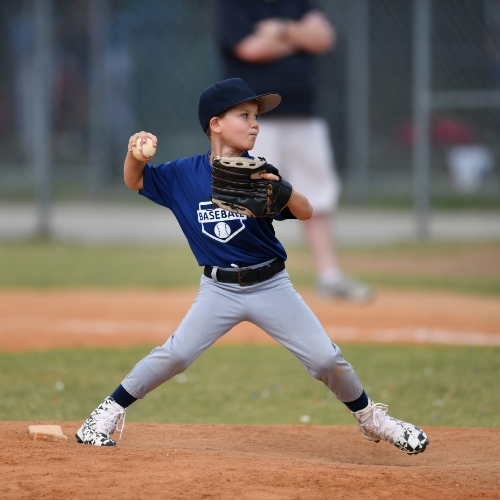
Little League elbow and Little League shoulder are overuse injuries from repetitive throwing in growing baseball and softball players. Every throw sends stress across the inside of the elbow and a twisting load through the shoulder — and a young thrower’s body is still developing, which makes those areas especially vulnerable.
That stress lands on growth plates that haven’t finished hardening, which is why the same throwing motion a grown adult tolerates can hurt a still-growing arm. Young players come to us when they notice inner-elbow soreness, a drop in velocity, shoulder tightness, or pain as the arm slows down after release. Our job is to find the mechanical cause and give a clear, staged plan to build back safely.
When to Get Your Throwing Mechanics Evaluated
Catching a mechanical flaw early keeps elbow or shoulder strain from wrecking a season. A throwing evaluation shows how your hips, spine, shoulder, and arm work together at high speed — and where the stress is piling up. An evaluation is worth booking if you’re:
- Feeling ongoing inner-elbow soreness after a throwing session or game.
- Noticing a deep shoulder ache during the cocking or acceleration phase of a throw.
- Seeing a sudden drop in velocity, distance, or command.
- Fighting upper-back stiffness or limited hip mobility that saps rotational power.
- Coming back from an arm strain and wanting a safe return-to-throwing plan.
- Losing forearm strength or grip late in workouts or innings.
- Looking to clean up your mechanics to lower future injury risk.
Throwing Injuries We Treat
Repetitive throwing loads the whole chain, no matter the age. We build targeted plans for the most common overhead conditions:
- Medial Epicondylar Stress: irritation at the inner elbow from the twisting load during arm cocking. We build forearm strength, restore wrist mobility, and improve how force transfers up from the lower body.
- Proximal Humeral Epiphysitis: stress at the upper-arm growth center in young throwers. We manage throwing volume, sharpen shoulder-blade control, and improve upper-back mobility.
- Rotator Cuff and Scapular Overload: strain in the muscles that slow the arm down after release. We strengthen the back of the shoulder and its stabilizers to absorb that force safely.
- Kinetic Chain Energy Leaks: breakdowns in hip rotation or core control that force the arm to work harder. We train full-body patterns so power comes from the legs and trunk.
How We Treat Throwing Injuries
We start with a throwing-focused assessment: shoulder rotation, upper-back mobility, core stability, and hip mechanics — because power and stress both travel up the chain. We measure it, so we work from real numbers, not a hunch. From there we keep your legs and conditioning sharp while the arm heals, then rebuild in stages. A typical program includes:
- Whole-chain movement checks to correct the flaws overloading the arm.
- Shoulder-blade and core work to give the arm a stable base to throw from.
- Strength work for the muscles that decelerate the arm, so the shoulder handles high speed safely.
- Mobility work for the upper back, hips, and shoulders to smooth out the delivery.
- A step-by-step interval throwing program that rebuilds velocity by controlled distance and throw counts.
- Balance and timing drills for smooth, joint-friendly power.
Why Throwers Choose St. Pete Physical Therapy
Our youth sports physical therapy specialists work like performance consultants for young throwers. Every progression is backed by what we measure, and we keep throwers, parents, and coaches on the same page about the plan and the timeline.
- Every step guided by measured movement data.
- A focus on rebuilding velocity and arm durability, not just easing pain.
- Clear progress markers so you can see the arm getting stronger.
- Throwing limits that protect the joint and, in young athletes, the growth plates.
Your First Throwing Evaluation
Your first visit starts with your throwing history, your sport’s demands, and your symptoms. We then measure joint mobility, strength, and how well the whole chain works together to pinpoint the stress. Together we turn that into a clear plan with real targets, and you’ll leave with an active program to start right away.
Get Back on the Mound with Confidence
If elbow stiffness or shoulder pain is holding back your throw, an evaluation is the right next step. At St. Pete Physical Therapy, we’ll calm the irritated tissue, fix the mechanics behind it, and rebuild your arm for a full season. Contact St. Pete Physical Therapy today to schedule an evaluation for Little League elbow and shoulder in St. Petersburg, FL.
Little League Elbow & Shoulder FAQs
Can therapy help a thrower without shutting down throwing completely?
Is Little League elbow only a young athlete's injury?
How long until I can pitch or throw at full effort again?
Ready to Move Better ?
Whether you are recovering or training, your next step starts here.
You don’t have to figure this out alone. We will build a plan around your goals so you can get back to doing what you love with confidence.