
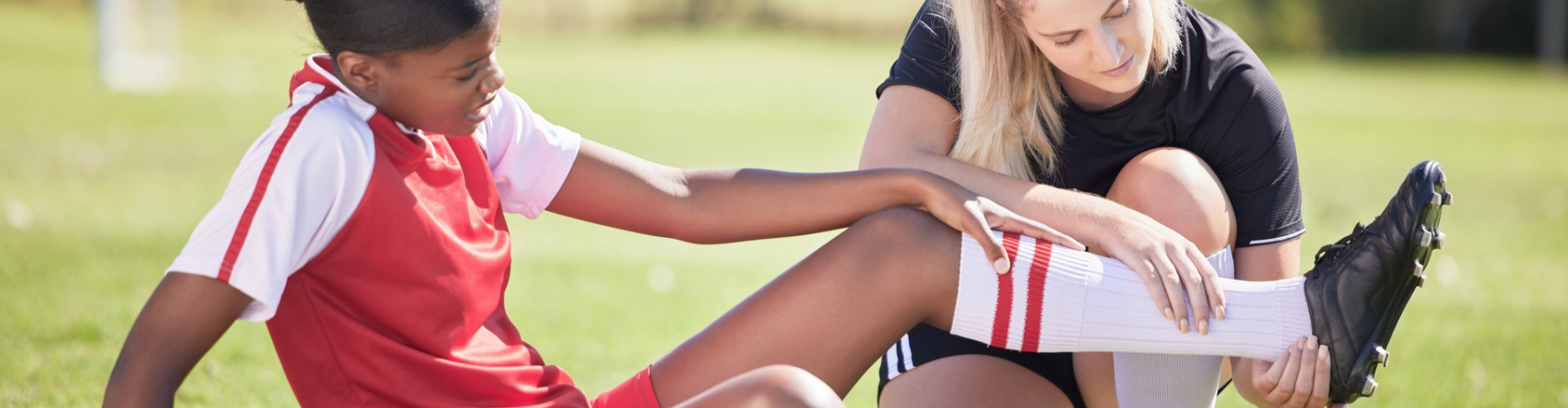
Youth Sports Injuries in St. Pete: Care Built for Growing Athletes
Youth Sports Injuries Are Not Just “Small” Adult Injuries
A young athlete’s body is still under construction. Open growth plates, developing tendons, and movement patterns that are still maturing mean growing athletes get hurt differently than adults — and heal differently too. In fact, in a growing athlete, the tendon is often stronger than the growth cartilage it pulls on, which is exactly why so many youth injuries show up at the growth plate.
That’s why youth sports injuries in St. Pete deserve care built for developing bodies, not a scaled-down adult protocol. At St. Pete Physical Therapy, we evaluate the whole athlete — mechanics, strength, growth stage, and sport demands — to treat the injury and the cause behind it, so your child returns safely and doesn’t keep landing back on the sidelines.
The Two Ways Young Athletes Get Hurt
Acute injuries happen in a single moment — a bad landing, a collision, a sudden cut. Sprains, strains, fractures, and ligament tears like ACL injuries fall here.
Overuse injuries build quietly over weeks of repetitive load and not enough recovery. They’re increasingly common in kids who play one sport year-round, and they’re the ones parents most often miss — because there’s no single moment to point to. The ache just doesn’t go away.
Most of the conditions below are overuse injuries. The good news: caught early, they respond well. Pushed through, they turn into long, frustrating recoveries.
Youth Sports Injuries We Treat
Each condition below has its own in-depth page. Start here for the overview, then dig into whichever fits your athlete.
Growth Plate Injuries (Traction Apophysitis)
In growing athletes, the muscles can pull on the growth centers and cause pain and irritation. This commonly occurs during growth spurts or with a sudden increase in physical activity. This can irritate the growth plate and lead to conditions like Sever’s disease (at the heel), Osgood-Schlatter (below the knee), and Sinding-Larsen-Johansson (bottom of the kneecap). They flare during growth spurts,. Learn about Growth Plate Injuries →
Little League Elbow & Shoulder
Repetitive throwing can cause high loads to the athlete’s elbow and upper arm. In youth athletes the growth plate is the weakest link and most susceptible to injury. High pitch counts, year round play, and poor mechanics can lead to pain, lost velocity, and stiffness after throwing. Our specialists evaluate the whole throwing chain — not just the sore spot. Learn about Little League Elbow & Shoulder →
Pelvic Apophysitis
Sprinting, kicking, and sudden cutting pull hard on the growth centers of the pelvis. This can lead to irritation of the growth plate or even fractures. These injuries are most commonly seen in soccer players, sprinters, and field athletes. It shows up as sharp pain in the hip, groin or glutes, often occurring after an explosive movement. Learn about Pelvic Apophysitis →
Spondylolysis & Spondylolisthesis
A stress reaction or fracture in the lower spine is most commonly seen in gymnasts, dancers, football linemen, and volleyball players who repeatedly arch under load. Persistent low-back pain with back-bending is the classic sign. Early treatment leads to less time lost from sports and a faster recovery. Learn about Spondylolysis & Spondylolisthesis →
Patellofemoral Pain Syndrome (PFPS)
Pain and irritation around or under the kneecap, usually worse with running, squatting, stairs, or sitting for prolonged periods of time. It is typically seen in adolescent female athletes or during periods of rapid growth. Typically weakness at the hip leads to poor mechanics and increased loading on the knee. PT will address weakness in the whole chain, not just the part that hurts. Learn about Patellofemoral Pain →
Hypermobility in Young Athletes
Some young athletes are hyper flexible in comparison to their peers. They may seem to be “double jointed”. That flexibility isn’t a problem on its own, in fact in many sports it may be an advantage. However, without strength in the stabilizing muscles, it can lead to instability, fatigue, and recurring pain. PT builds the control without taking away the mobility. Learn about Hypermobility in Young Athletes →
Signs It’s Time to Get Your Athlete Checked
Young athletes tend to push through pain and keep quiet about it — so a parent is often the first to notice something’s wrong. It’s worth a visit when you see your child:
- Pain during or after practice that doesn’t improve with rest
- The same pain returning after a period of rest
- Limping, favoring a side, or moving differently than usual
- Sudden loss of speed, power or endurance
- Recurring muscle tightness or joint stiffness
- Pulling back from a sport they normally love
When something’s been off for more than a week, or keeps coming back, don’t wait it out. Early intervention often leads to faster recovery and less total time lost from the sport they love.
Our Approach: Treat the Athlete, Not Just the Injury
Our approach moves beyond simply reducing pain. We work to find out why an injury happened — the mechanics, the imbalance, the training load — and fix that too, so it doesn’t return.
Every plan combines hands-on care to reduce soreness, growth-aware strength training to protect developing joints, and sport-specific movement retraining to bridge the gap between the clinic and competition. We modify training rather than shutting it down whenever it’s safe, so your athlete keeps their fitness and their connection to their sport while they heal.
For the full picture of how we work with growing athletes — including our youth sports PT specialist — see our Youth Sports Physical Therapy page.
Knowing When It’s Safe to Return
We base return-to-sport on what your child’s body can actually do, not the calendar. Before clearing an athlete, we check full strength, joint stability, pain-free movement, and clean execution of sport-specific drills. When the box is checked, they go back with confidence — and often, with better mechanics than before the injury.
Once they’re cleared and ready to build beyond recovery, our strength and conditioning division, St. Pete Sports Performance, runs youth athletic development with the same clinicians — turning “healed” into “harder to hurt.”
Frequently Asked Questions
What makes youth sports injuries different from adult ones?
Should my child stop playing entirely while they recover?
How do you decide when it's safe to return to sport?
Can my child start PT without a referral?
Ready to Get Your Young Athlete Back in the Game?
Don’t let an injury cost your child their season — or their confidence. Our team builds a recovery plan around your athlete’s sport, stage, and goals, and gets them back safely.
Ready to Move Better ?
Whether you are recovering or training, your next step starts here.
You don’t have to figure this out alone. We will build a plan around your goals so you can get back to doing what you love with confidence.