
Specialized Care for Growth Plate Injuries and Apophysitis
At St. Pete Physical Therapy, we help young athletes recover from growth plate injuries and get back to the sports they love. Several members of our team specialize in pediatric sports physical therapy, so we understand how a growing body responds to training — and how to protect it. Most growth plate problems in young athletes are a type called apophysitis: pain where a tight, hard-working muscle pulls on a growth center that hasn’t finished hardening yet.
Rest has its place, but rest alone rarely fixes the problem. We treat apophysitis as a loading and movement issue. That means easing the stress on the sore area while we correct the muscle imbalances and movement habits that caused it — and building strength through the whole chain, not just the injured spot. The result is an athlete who recovers faster, moves better, and stays in their sport for the long haul.
Understanding Growth Plate Injuries and Apophysitis
Growth plate injuries in young athletes usually happen when a muscle repeatedly pulls on the spot where it attaches to a still-developing bone. Growth centers are softer than mature bone — and softer than the tendons pulling on them — so they become the weak link during a growth spurt. Sometimes the pull is gradual, from months of repetitive training. Occasionally a single forceful movement, like a hard sprint or kick, irritates the growth center.
This is different from an acute growth plate fracture, which comes from a direct, high-force impact and needs medical imaging and physician care. Most sport-related cases we see are traction apophysitis — an overuse condition that responds very well to guided physical therapy.
Kids who focus on one sport and train long hours are especially prone, because they load the same area over and over. That’s why specialized care matters: knowing the movement patterns, the strength imbalances, and the tissue-healing timelines is what keeps these injuries from coming back. Parents and coaches should watch for sharp pain during sprinting, swelling that lingers after activity, or a sudden change in how a young athlete moves.
When to Have a Growth Plate Injury Evaluated
Catching this stress early keeps a small problem from wrecking a season. A pediatric sports physical therapy evaluation shows exactly how your athlete’s muscles, tendons, and joints work together during fast, high-load movements — and where the strain is landing. Watch for these signs that an evaluation would help:
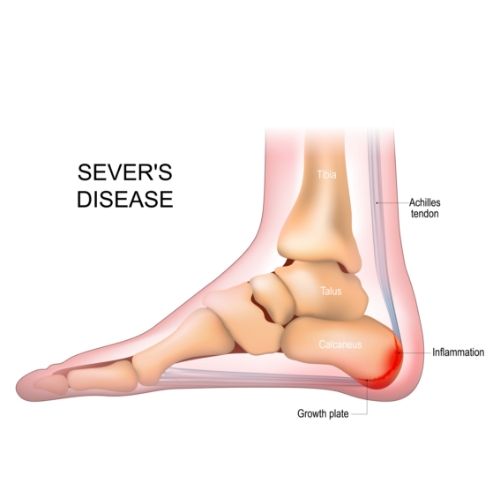
- Sharp heel pain during running or jumping, often called Sever’s disease.
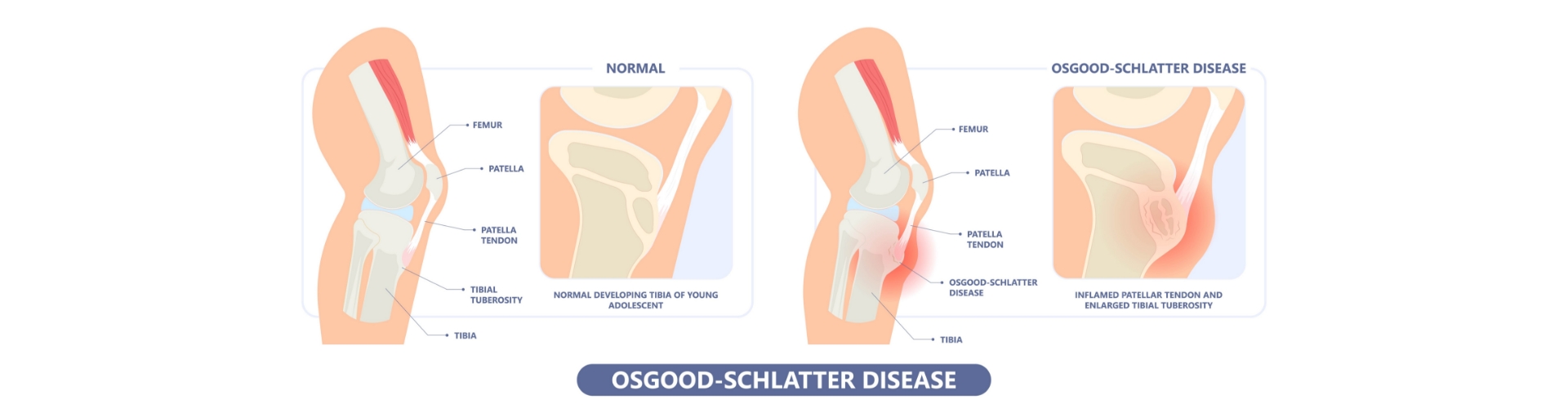
- Painful swelling and tenderness just below the kneecap after running or squatting — the hallmark of Osgood-Schlatter disease.
- Ongoing inner-elbow pain when throwing, which can point to medial epicondyle apophysitis.
- Point tenderness at the bottom of the kneecap from Sinding-Larsen-Johansson syndrome.
- A limp, an altered stride, or slower sprint speed in practice or games.
- Lasting tightness in the hamstrings, calves, or quads after a recent growth spurt.
Common Growth Plate Conditions We Treat
Different bones react to stress in different ways. Our pediatric specialists build targeted plans for the most common growth-center conditions:
- Sever’s Disease: traction at the heel where the Achilles attaches. We work on calf flexibility, ankle mobility, and how the foot strikes the ground to lower the impact.
- Osgood-Schlatter Disease: irritation just below the kneecap from the quads pulling during jumping and kicking. We improve landing form, quad strength, and hip stability.
- Medial Epicondyle Apophysitis: strain at the inner-elbow growth plate in throwers. We look at how force travels up from the legs and trunk, plus upper-back mobility and shoulder control, to take load off the arm.
- Sinding-Larsen-Johansson Syndrome: traction at the bottom of the kneecap. We focus on glute strength, kneecap tracking, and shock absorption through the leg.
How We Treat Growth Plate Injuries
Every plan starts with a hands-on movement assessment. We measure joint range of motion, compare strength side to side, and watch how your athlete controls movement under load. That gives us real numbers to build the plan around — and a baseline we re-check as they progress. The goal is to keep them conditioned and connected to their sport while the growth center calms down.
A typical program includes:
- Whole-chain movement checks, so we fix the compensations putting extra stress on the growth center.
- Strength work sized for a growing body — building support around the bone without overloading it.
- Mobility work to loosen the tight muscle groups tugging on the sore attachment.
- Technique retraining for running, landing, and throwing to spread force more evenly.
- Balance and control drills to keep movement steady and joint-friendly.
- A smart activity plan so they stay active without overloading healing tissue.
Why Families Choose St. Pete Physical Therapy for Growth Plate Care
Our specialists work like performance coaches for growing athletes. Every progression is backed by what we measure, and we keep parents, coaches, and the athlete in the loop so everyone knows the plan and the timeline. We hold young athletes to smart, safe movement standards while keeping their competitive edge.
- Decisions guided by measured movement data, not guesswork.
- A focus on building capacity, so your athlete returns stronger — not just pain-free.
- Clear progress markers you can actually watch improve.
- Training limits designed to protect developing bone.
Your First Visit
Your first visit starts with a conversation about your athlete’s sport, training schedule, and symptoms. From there we assess joint mobility, baseline strength, and movement quality to pinpoint where the stress is coming from. Together we turn those findings into a clear plan with specific targets. You’ll leave understanding what’s going on — and with an active program to start right away.
Get Your Young Athlete Back in the Game
If growth plate pain is keeping your athlete off the field, an evaluation is the right next step. At St. Pete Physical Therapy, we’ll ease the strain, build the strength around it, and guide a safe return to full activity. Contact St. Pete Physical Therapy today to schedule an evaluation for growth plate injuries in St. Petersburg, FL.
Growth Plate Injuries FAQs
Can physical therapy help growth plate injuries without stopping all activity?
How is a growth plate injury different from an adult tendon injury?
How long does it take for Sever's or Osgood-Schlatter to settle down?
Ready to Move Better ?
Whether you are recovering or training, your next step starts here.
You don’t have to figure this out alone. We will build a plan around your goals so you can get back to doing what you love with confidence.