

Performance Physical Therapy for Hypermobility in Young Athletes
At St. Pete Physical Therapy, we help hypermobile young athletes turn extra flexibility into real, controllable strength. Our physical therapy for hypermobility in young athletes in St. Petersburg, FL looks at how loose joints handle force and control during training and competition.
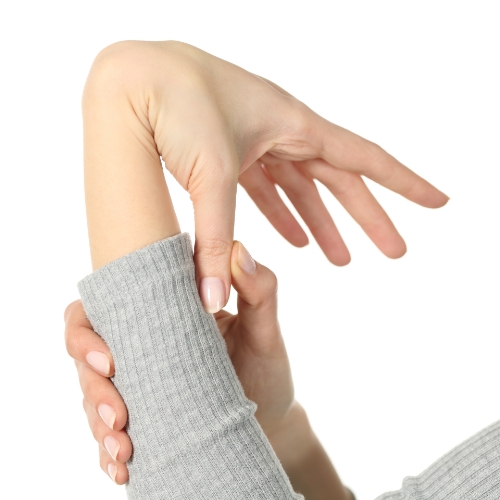
Being hypermobile means the joints move beyond normal ranges. That can be a gift in gymnastics, dance, swimming, and cheer — but flexibility without control creates instability. We don’t rely on rest or braces. We treat hypermobility as an athletic profile to train: build the strength, joint awareness, and control to stabilize those big ranges. The goal is turning bendy into powerful, and keeping joints healthy for the long haul.
Understanding Loose Joints and Motor Control
Hypermobility comes from naturally loose connective tissue. In a growing athlete, the muscles and tendons are often stronger than the growth cartilage they pull on, which leaves developing joints especially vulnerable when control is missing.
Families reach out when a young athlete has joints that pop or click, sprains that keep coming back, early muscle fatigue, or shaky balance after a growth spurt. The aim is to build the deep stability and control that let them use their flexibility safely instead of getting hurt by it.
When to Address Hypermobility and Joint Instability
Catching control problems early keeps hypermobility from leading to chronic joint irritation or joints that repeatedly slip. An evaluation shows how the hips, knees, ankles, shoulders, and spine handle fast movement — and where stability is lacking. Book one if your athlete is:
- Getting frequent ankle sprains, shoulder slips, or joints that hyperextend in sport.
- Dealing with lingering muscle fatigue or achy joints after busy practices.
- Losing balance, coordination, or posture control after a growth spurt.
- Struggling to produce power despite excellent flexibility.
- Coming back from repeated joint tweaks and wanting a safe return-to-play plan.
- Feeling clicking, popping, or instability with lifting or dynamic movement.
How We Build Stability for Hypermobile Athletes
Extra flexibility puts the demand on the nervous system and supporting muscles. We build control within those large ranges through:
- Deep Core and Trunk Control: strengthening the deep stabilizers to anchor the spine and pelvis during explosive movement.
- Balance and Joint Awareness: training the nervous system to sense and correct joint position automatically under load.
- Mid-Range Strength: building strength through the middle of each joint’s range to prevent hyperextension on landings and stops.
- Shoulder Stability: strengthening the muscles around the shoulder blade and rotator cuff to secure loose shoulder joints in overhead sports.
How We Treat Hypermobility, Step by Step
We start by measuring active versus passive range of motion, single-leg stability, core strength, and motor timing — so the plan is built on real numbers. From there we keep conditioning up while we build control. A typical program includes:
- Whole-chain movement checks to correct compensations that overload loose joints.
- Retraining muscles to fire before movement, so stabilizers engage on time.
- Controlled strength work to build muscle stiffness that protects the ligaments.
- Teaching athletes to work in safe ranges instead of hanging on end-range flexibility.
- Sport-specific jumping, landing, and cutting so joints stay stable in competition.
- Training-load and recovery guidance to avoid whole-body fatigue.
Why Families Choose St. Pete Physical Therapy for Hypermobility
Our specialists work like performance consultants for young athletes and their families. Every progression is backed by what we measure, and we keep athletes, parents, and coaches on the same page about the plan and the timeline.
- Every step guided by measured movement data.
- A focus on building joint control and power, not just easing aches.
- Clear progress markers you can watch improve.
- Movement standards designed to protect long-term joint health.
Your First Visit
Your first visit starts with your training schedule, sport demands, and symptoms. We then assess joint mobility, stabilizer strength, and motor control to find the stability gaps. Together we build a clear plan with real targets for control and power, and you’ll leave with an active program to start right away.
Turn Flexibility Into Usable Power
If loose joints or frequent tweaks are holding your athlete back, an evaluation is the right next step. At St. Pete Physical Therapy, we’ll build the control and strength that stabilize those big ranges and keep joints healthy. Contact St. Pete Physical Therapy today to schedule an evaluation for hypermobility physical therapy in St. Petersburg, FL.
Hypermobility in Young Athletes FAQs
Will therapy take away my athlete's natural flexibility?
Why does hypermobility raise injury risk?
How long does it take to build dynamic stability?
Ready to Move Better ?
Whether you are recovering or training, your next step starts here.
You don’t have to figure this out alone. We will build a plan around your goals so you can get back to doing what you love with confidence.