

Tennis Elbow Treatment: Why Physical Therapy Works Best
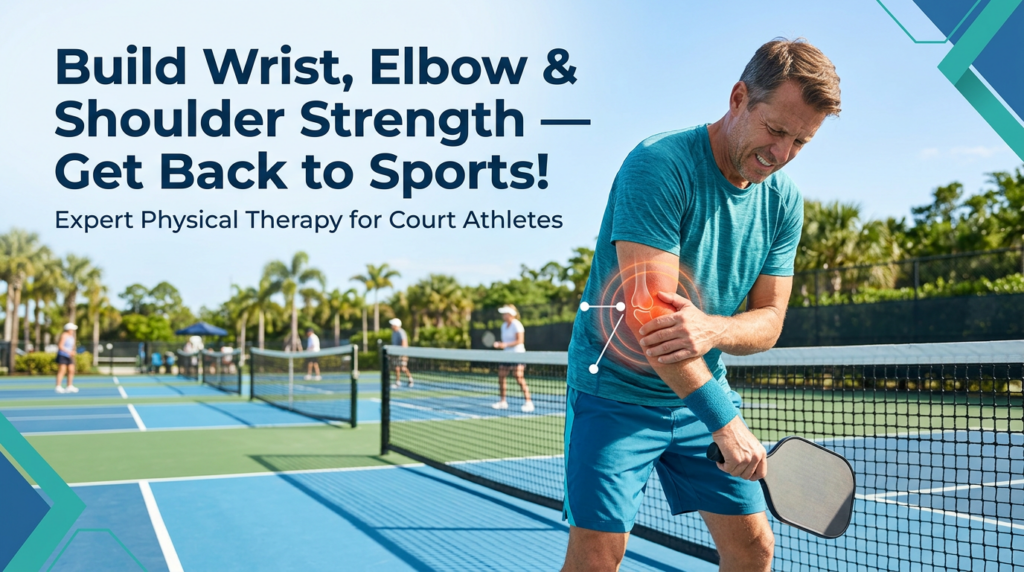
If you’re searching for effective tennis elbow treatment, especially in St Petersburg, FL, it’s important to understand what truly works and why physical therapy consistently outperforms at‑home care. Tennis elbow, or lateral epicondylitis, is a common overuse injury that causes pain and tenderness on the outside of the elbow. It often develops from repetitive wrist and forearm movements — not just in tennis players, but also in baseball athletes, pickleball players, tradespeople, weightlifters, and anyone who performs gripping or repetitive tasks.
Whether you’re swinging a racquet, lifting at the gym, or working with tools, tennis elbow can make everyday activities painful. Seeking early, professional tennis elbow treatment helps reduce pain, restore strength, and prevent long-term issues.
Many people attempt to manage symptoms on their own using rest, braces, or online exercises. While mild cases may improve, relying solely on self-care often delays healing. A structured rehab plan — especially one guided by a Sports Physical Therapist at St Pete Physical Therapy — delivers better, faster, and longer-lasting results.
Symptoms and Challenges of Tennis Elbow
Tennis elbow typically presents with:
- Pain on the outside of the elbow
- Pain that may radiate into the forearm and wrist
- Discomfort when gripping, lifting, or carrying
- Pain when shaking hands or turning a doorknob
- Tenderness over the lateral elbow
- Weak grip strength
If left untreated, tennis elbow can become chronic, limiting strength, athletic participation, and quality of life.
Tennis Elbow Treatment Options: Physical Therapy vs. At‑Home Care
The goal of any tennis elbow treatment plan is to reduce pain, restore mobility, and rebuild strength. Here’s how physical therapy stacks up against self-managed care.
1. Diagnosis and Personalized Assessment
Self-Care
Most self-treatment involves trial‑and‑error: online stretches, braces, and rest. Without an accurate diagnosis, it’s difficult to identify the root causes — which may involve shoulder weakness, poor posture, or improper lifting and gripping technique.
Physical Therapy
At St Pete Physical Therapy, your Sports PT performs a detailed evaluation that includes:
- Elbow and forearm strength testing
- Wrist mobility assessment
- Grip strength testing
- Shoulder and core strength evaluation
- Movement pattern and posture analysis
- Sport‑specific or work‑specific mechanics
Advantage:
Physical therapy ensures a correct diagnosis and a targeted treatment plan — preventing prolonged pain and unnecessary setbacks.
2. Pain Relief and Inflammation Management
Self-Care
Typical at-home strategies include ice, rest, and anti-inflammatory medications. These may temporarily reduce discomfort but do not fix mechanical imbalances.
Physical Therapy
Sports PTs use techniques such as:
- Manual therapy
- Soft tissue mobilization
- Joint mobilizations
- Blood flow optimization strategies
- Progressive tendon loading
These methods reduce pain while also improving tendon healing and function.
Advantage:
Physical therapy offers hands-on techniques and scientific progression — leading to lasting improvements.
3. Restoring Strength and Preventing Re-Injury
This is where PT outperforms home care by a wide margin.
Self-Care
Many people rest until the pain improves — then return to activity without rebuilding strength. This leads to a cycle of recurring pain.
Physical Therapy
A complete tennis elbow rehab program at St Pete Physical Therapy includes strengthening for:
Forearm Muscles
- Wrist extensors
- Wrist flexors
- Grip muscles
- Supinators and pronators
Shoulder Strength
Weakness in the shoulder — especially the rotator cuff and scapular stabilizers — increases stress on the elbow during gripping, throwing, lifting, and racquet sports.
Strengthening the shoulder helps:
- Improve force transfer
- Decrease overload to the forearm
- Protect the elbow during sport and lifting
Wrist Stability
Many sports and job tasks require dynamic wrist control. Strengthening the wrist:
- Reduces tendon strain
- Improves grip efficiency
- Enhances durability in repetitive tasks
Core Strength
Your core dictates your upper-body mechanics. A weak core forces the elbow and wrist to compensate, especially in:
- Tennis and pickleball
- Baseball and softball
- Golf
- CrossFit and weightlifting
- Overhead work or carrying tasks
Core stability helps create a solid kinetic chain, reducing stress at the elbow and improving overall power.
Advantage:
Physical therapy builds a strong, stable foundation — preventing re-injury and improving long-term performance.
4. Function-Based, Athlete-Specific Recovery
Self-Care
Generic online advice doesn’t consider the demands of your sport or job. A baseball pitcher, pickleball player, and electrician require different approaches.
Physical Therapy
At St Pete Physical Therapy, your plan is customized to your goals:
- Sport mechanics analysis
- Return-to-sport progression
- Work-duty readiness
- Grip retraining for tools, racquets, or lifting
- Load management strategies
Advantage:
You recover better and smarter, with a plan that fits your lifestyle and athletic needs.
Making the Right Choice for Your Recovery
Self-care is a starting point — not a complete solution. Without targeted strengthening, especially in the shoulder, wrist, and core, tennis elbow often lingers or returns.
Physical therapy provides:
- A precise diagnosis
- Hands-on treatment
- Evidence-based strengthening progressions
- A complete kinetic-chain approach
- Guidance for safe return to sport and work
Athletes and active adults who choose physical therapy recover faster and more completely.
Start Healing with Professional Care
Don’t let elbow pain disrupt your game, your job, or your daily routine. The Sports Physical Therapy team at St Pete Physical Therapy is here to help you rebuild strength, eliminate pain, and return to the activities you love with confidence.
👉 Schedule your evaluation today and take the first step toward long-lasting relief and performance.