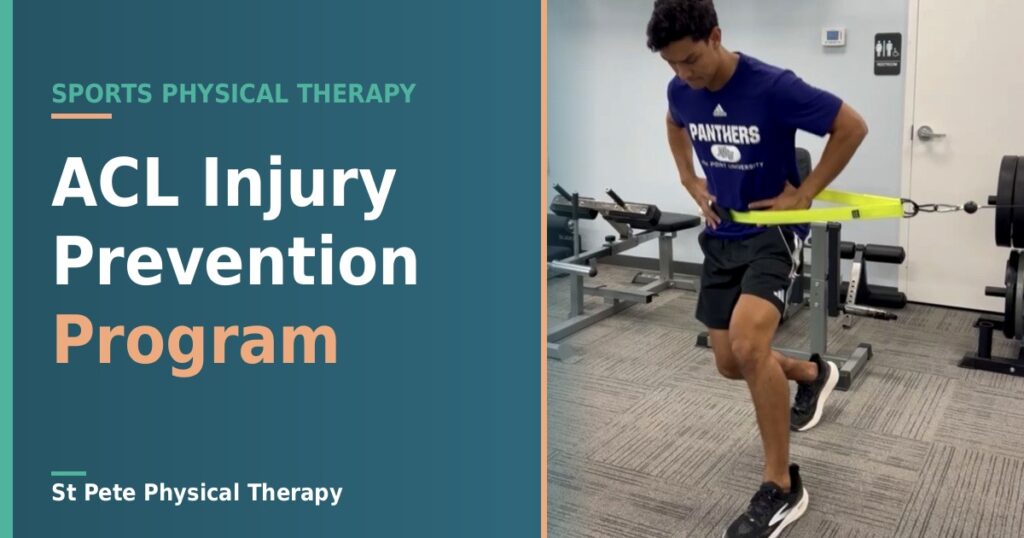
One bad landing. One awkward cut. That’s all it takes for an ACL tear to end a season, and the recovery that follows runs nine to twelve months. The good news: most non-contact ACL injuries are preventable, and ACL injury prevention is far more about how you move than how strong you are.
We work with high school, college, and weekend athletes across St. Petersburg who want to stay on the field, not rehab their way back to it. Below are the six things that actually move the needle — and the specific way to train each one.
Why ACL Injury Prevention Isn’t Just About Leg Strength
Here’s the mistake we see in the clinic every week: an athlete is plenty strong in a straight line but can’t control their knee when it matters — landing from a jump, decelerating, or changing direction. That’s when the ACL, the ligament deep inside your knee that keeps your shin from sliding forward, takes the load it wasn’t built for.
Strength is the base. But control under speed is what protects the knee. A real ACL injury prevention program trains both — plus balance, movement mechanics, and mobility — not just squats.
1. Warm Up to Prime, Not Just to Sweat
A dynamic warm-up wakes up the muscles that stabilize your knee and gets your nervous system firing before you ask it to sprint or cut. Skip it and you go into the first hard rep stiff and slow to react.
- Start with leg swings, walking lunges, and hip openers
- Progress to skips, side shuffles, and easy A-skips
- Move with quality first, then add speed
Ten focused minutes beats twenty rushed ones.
2. Build the Posterior Chain
Many ACL injuries happen because the quads overpower the hamstrings during deceleration. Your hamstrings, glutes, and hip stabilizers are the brakes that keep your knee from buckling inward.
- Train Nordic hamstring curls, Romanian deadlifts, and hip thrusts
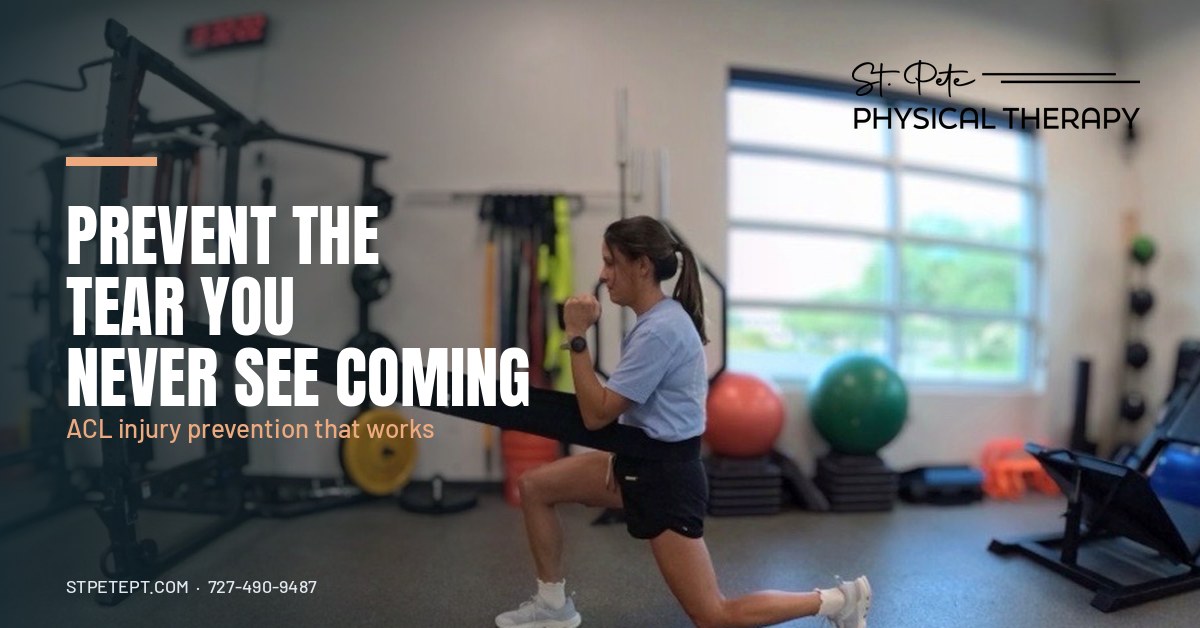
- Add single-leg work — Bulgarian split squats, single-leg RDLs — because sport happens on one leg
- Progress load gradually and keep form clean
If your hamstrings and glutes are strong, your knee has help. If they’re not, your ACL is on its own.
3. Train How You Land and Cut
Athletes don’t tear ACLs because they’re weak. They tear them moving badly under pressure. The single most valuable thing you can do is practice landing and cutting with your knee tracking over your toes — never caving inward.
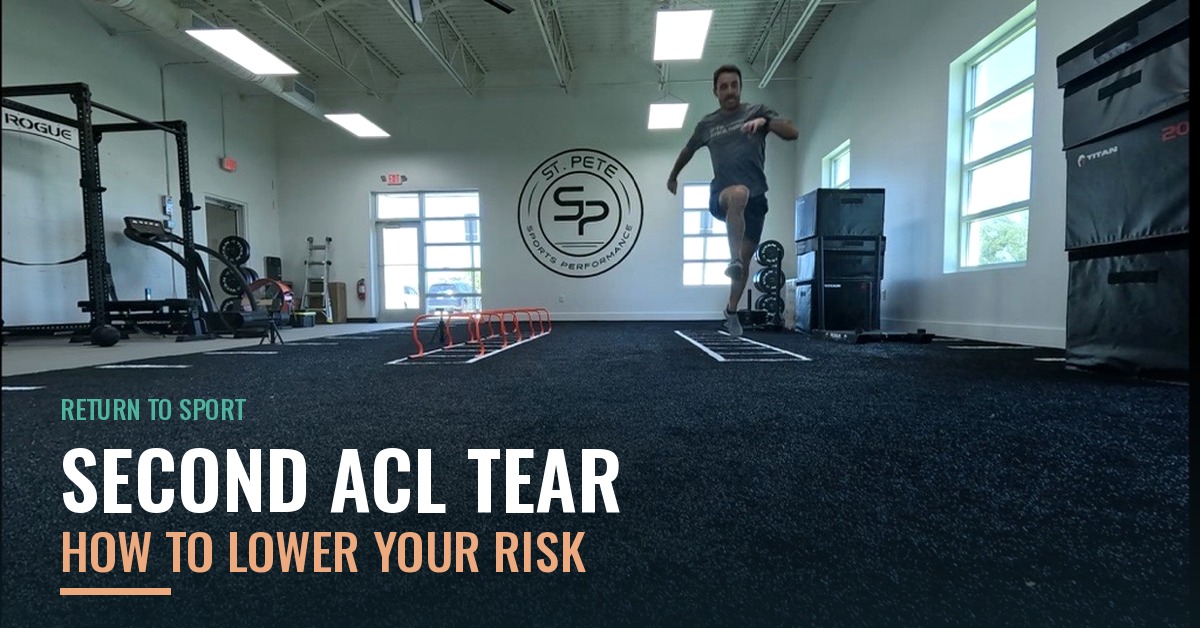
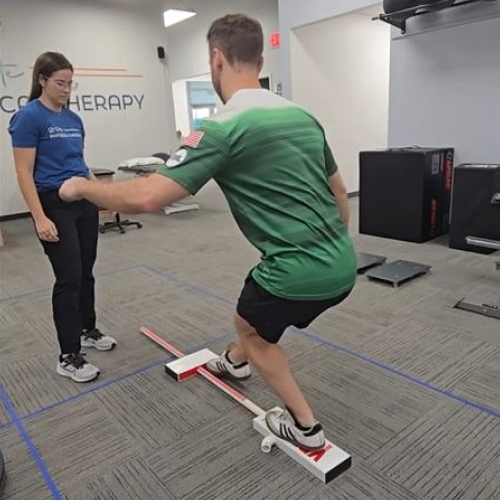
- Drill two-leg and single-leg landings, sticking each one quietly and under control
- Practice planting and changing direction with the knee aligned, not collapsing in
- Build up to game speed only once the mechanics hold
You’re not ready for full-speed cutting until you can land on one leg, hold it still, and repeat it without your knee drifting inward.
4. Own Your Core and Trunk Control
Your trunk decides where your force goes. When your core can’t control your torso, that load dumps into your knees. Crunches don’t fix this — anti-rotation and single-leg work do.
- Train planks, Pallof presses, and dead bugs for control, not just burn
- Add single-leg balance with a reach or a light med-ball toss
- Include rotation, since that’s how you actually move in sport
A stable trunk keeps force out of your knee.
5. Sharpen Balance and Proprioception
Proprioception is your body’s sense of where your joints are without looking. It’s what lets you correct a bad landing in a split second. Train it and your knee reacts faster than you can think.
- Balance on one leg, then close your eyes, then add a reach or a catch
- Use unstable surfaces and hop-and-stick drills
- Progress with intent — harder, not just longer
The faster your knee can react, the less likely it is to get caught in a bad position.
6. Keep Your Hips Mobile
Tight hips force compensations that pull the knee into risky positions and rob you of shock absorption on landing. Mobility keeps the load where it belongs.
- Work hip openers and hip flexor and adductor stretches after training
- Follow every mobility drill with an active-control exercise so the new range is usable
- Aim for smooth, controlled range — not extreme flexibility
Mobile hips absorb force so your knees don’t have to.
ACL Injury Prevention Works When It’s Consistent
Any one of these helps. Together, run two to three times a week, they change how your knee behaves when it counts. The athletes who stay healthy aren’t doing anything exotic — they’re doing the right things consistently, and they’re getting their movement checked before something goes wrong.
If your knee already gives out, swells, or feels unstable, get it evaluated before you train through it. Those are red flags, not something to push past. (The JOSPT clinical guidance on ACL injury prevention backs up the neuromuscular-training approach above.)
The bottom line: ACL injury prevention is trainable, it’s specific, and it works best when a professional builds it around how you move. Book a movement screening at St Pete Physical Therapy — call 727-222-5619 or visit stpetept.com — and let’s keep you on the field instead of on the table.