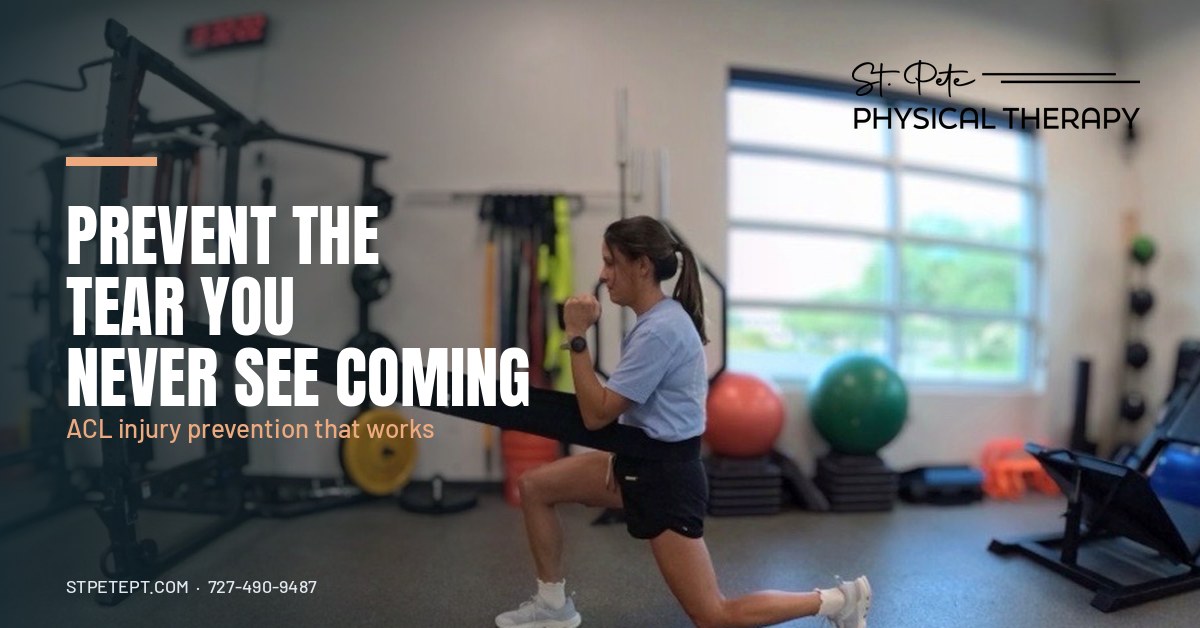
ACL injury prevention is not a warm-up drill you tack on when there is time. It is training, it is dosed, and the research says it works: structured neuromuscular programs cut ACL injury risk by roughly half.
Yet most athletes never do one. Instead, they stretch, jog two laps, and call it a warm-up. Then, in October, a knee buckles on a cut nobody was even touching, and the next twelve months belong to a surgeon.
Here is what actually reduces the risk, what the evidence says, and how we build ACL injury prevention into training for athletes in St. Petersburg.
Why ACLs Tear (It Is Usually Not Contact)
The ACL sits inside your knee and stops the shin from sliding forward or twisting out from under you. Most tears in cutting and jumping sports happen without anyone touching you.
Meanwhile, the mechanism is remarkably consistent. You decelerate hard, land flat, or plant to change direction, and the knee collapses inward while the leg is nearly straight. Consequently, the ligament takes a load it was never built to take.
That collapse is a movement pattern. Therefore, it is trainable.
Who Carries the Most Risk
Female athletes in basketball and soccer tear their ACL at two to eight times the rate of male athletes in the same sports. Additionally, athletes who have already torn one ACL carry roughly four times the risk of tearing the opposite knee.
Fatigue matters too. For example, late in a half or deep into a weekend tournament, your landing mechanics quietly decay. As a result, the knee that held up fine in the first quarter is the one that gives way in the fourth.
What Real ACL Injury Prevention Includes
Generic “balance and core work” is not a program. Furthermore, it is not what the research tested. In practice, the programs with the best evidence, such as FIFA 11+ and PEP, share the same ingredients:
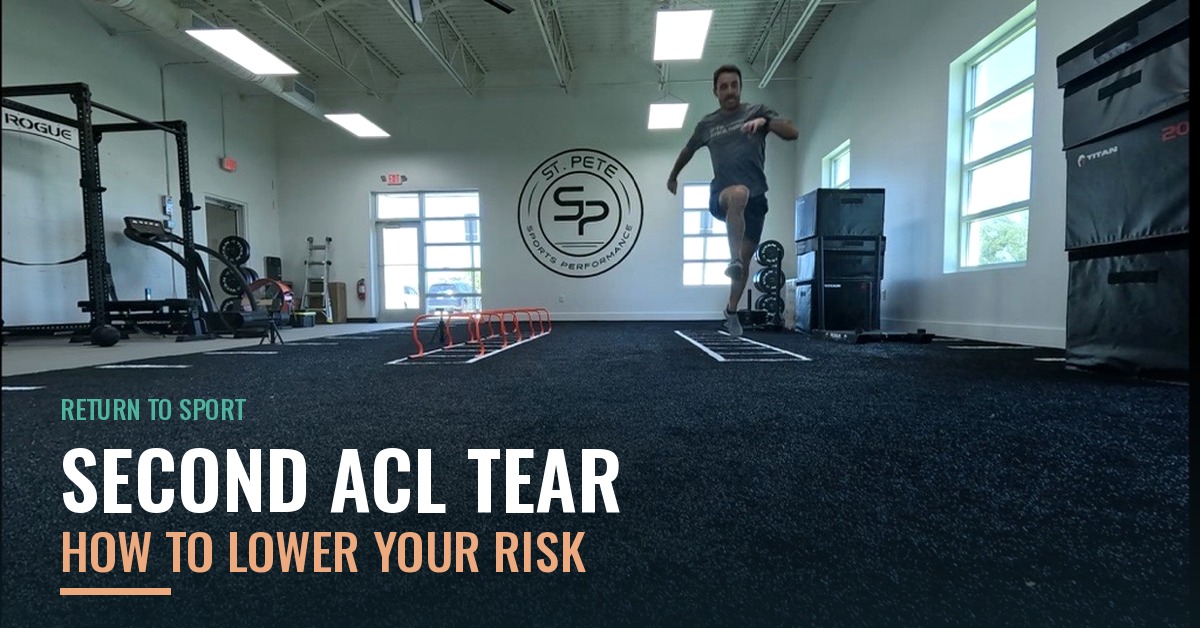
- Plyometrics with coached landings. Prevention programs that include plyometric exercises reduce ACL injury risk by around 60 percent. However, the jumps only help if someone corrects how you land. Soft, knee-over-toe, hips back. In other words, the landing is the exercise.
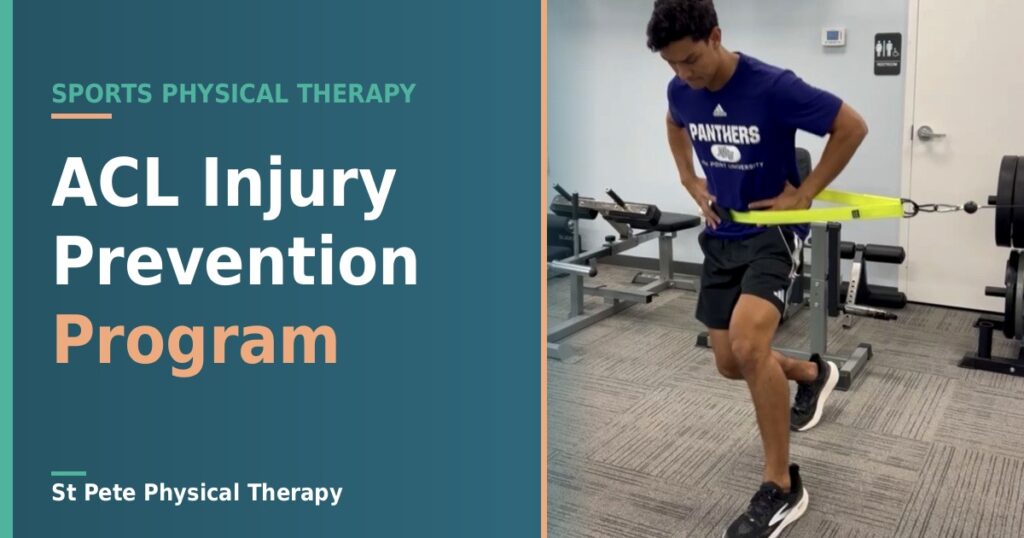
- Posterior chain strength. Hamstrings, glutes, and hip control. The hamstring is the ACL’s backup, and most athletes are quad-dominant. As a result, the knee gets pulled forward with nothing behind it to resist.
- Deceleration and cutting drills. You have to train stopping, not just running. After all, most tears happen in the stop, not the sprint.
- Balance and neuromuscular control. Single-leg work, perturbation, and reactive drills, because games are chaotic and rehearsed movement is not.
- Real feedback. Verbal coaching feedback is one of the components that predicts how well a program works. Consequently, a program run from a printout with nobody watching is a much weaker program.
The Part Nobody Wants to Hear: Consistency Beats Complexity
If you take one thing from this article, take this. Compliance is the strongest predictor of whether a prevention program works — high compliance outperforms program complexity. In other words, athletes who actually complete at least three quarters of the sessions get the protection. Athletes who do it twice in August do not. Additionally, the programs that work are led by a coach or clinician who watches and corrects, rather than handed out as a PDF.
Fifteen to twenty minutes, two to three times per week, all season. That is the dose. For example, we would rather see a soccer player run a simple program every week than a perfect program for two weeks in preseason.
If You Have Already Torn One
Prevention matters more after an ACL reconstruction, not less. Your other knee is now at real risk. Moreover, returning to sport before you are ready raises the odds of a second tear on either side.
Subsequently, the year after surgery is the year to train hardest on mechanics. Your rehab should not end the day you are cleared. Instead, it should turn into a prevention program that runs through your next full season.
Therefore, we do not clear athletes by the calendar. We clear them by testing: strength symmetry within 10 percent side to side, hop testing at 90 percent or better, and clean landing mechanics under fatigue, not just when you are fresh.
Get Screened Before the Season, Not After the Injury
At St Pete Physical Therapy, our sports physical therapy team screens athletes before there is a problem. We watch you land, cut, and decelerate, then we build ACL injury prevention into your training around what we find, so the work fits your sport and your schedule.
Furthermore, we work with the athletes we see all season here in St. Petersburg: soccer and basketball players, volleyball players, runners, and weekend warriors who still want to play a game of pickup without wondering about their knee.
Start Before the Whistle
The ACL you never tear needs no surgery, no nine-month rehab, and no lost season. Effective ACL injury prevention takes twenty minutes, a few times a week, done consistently, and coached by someone watching your mechanics.
You do not get that from a stretching circle before practice. However, you can build it into the season you already have, in the time you already spend warming up.
In short, prevention is cheaper than reconstruction. It is also a lot more fun than nine months of rehab.
Call 727-490-9487 or book a screening at stpetept.com, and let us build a prevention program for your sport before the season starts.