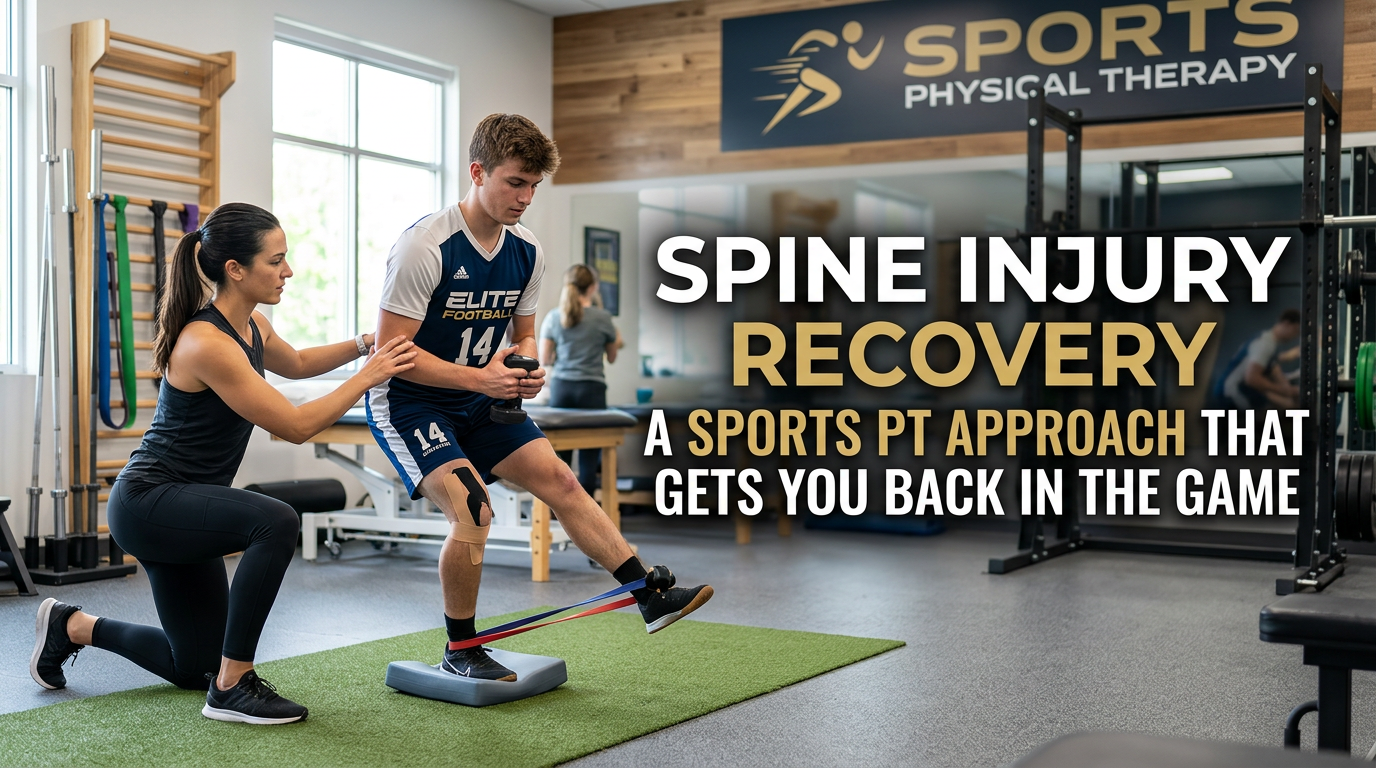
Back pain after a spine injury doesn’t have to sideline you for long. Effective spine injury recovery goes far beyond waiting for the pain to pass — it requires targeted movement, progressive strengthening, and a plan built around your specific activity goals. At St. Pete Physical Therapy, we specialize in helping active adults and athletes recover smarter and return stronger.
Why Rest Alone Won’t Heal a Spine Injury
After a back injury, rest feels like the right answer. It’s instinctive — if it hurts, stop moving. However, this is one of the most common and costly mistakes in spine injury recovery.
Prolonged rest reduces blood flow to the muscles, discs, and connective tissue surrounding your spine. These structures depend on movement to receive oxygen and nutrients. Without it, the cellular repair process stalls before it can truly begin. Tissue that isn’t being gently loaded and mobilized heals more slowly — and often less completely.
Additionally, inactivity allows muscle guarding to take over. Your body braces around the injury to protect it, and that protective tension quickly becomes its own problem. Posture shifts. Hips tighten. The upper back stiffens. Before long, the compensation patterns are creating as much dysfunction as the original injury.
Nerve-related symptoms — like radiating pain into the glutes or down the leg — can intensify when circulation is poor and tissue is left immobile. The window for early intervention matters.
Movement Is the Most Underrated Healing Tool
Here’s what the research consistently shows: early, controlled movement produces better outcomes than rest. Not aggressive movement. Not “pushing through.” But intentional, guided mobility that respects the injury while keeping the body in a healing state.
Movement drives blood flow. Blood flow delivers oxygen, growth factors, and the raw materials your tissues need to repair. When you move — even gently — you stimulate the cellular environment that makes healing possible.
Mobility training in the early stages of spine injury recovery serves several critical functions:
- Maintains circulation to muscles, discs, and connective tissue that are healing
- Limits stiffness before it becomes a barrier to recovery
- Reduces muscle guarding by signaling to the nervous system that movement is safe
- Preserves range of motion so you’re not fighting lost flexibility on top of an injury
- Speeds cellular repair by keeping the tissue environment active and responsive
The goal isn’t comfort in the short term — it’s function in the long term. Rest might feel better for a day or two. However, patients who begin gentle movement early consistently outperform those who wait. At St. Pete Physical Therapy, early mobility isn’t optional — it’s the foundation.
What Spine Injury Recovery Looks Like at St. Pete PT
Our approach to spine injury recovery is structured, progressive, and built around how you move — not a generic protocol. Here’s what that process typically includes:
Phase 1: Early Mobility — The Most Important Step You’ll Take
This is where recovery is won or lost. In the first days following a spine injury, our therapists get you moving — carefully, deliberately, and with full clinical oversight. This isn’t about pushing through pain. It’s about restoring the blood flow, tissue mobility, and neurological signaling your body needs to begin healing from the inside out.
We use hands-on manual therapy to reduce muscle guarding and decompress irritated nerve roots. Guided mobility work targets the spine, hips, and surrounding soft tissue to prevent stiffness from setting in and limiting your recovery ceiling. We also address how you move through your day — teaching you safe, low-strain mechanics for sitting, standing, getting out of bed, and walking — so every hour between sessions supports your progress, not your setback.
As a result, patients who commit to this early mobility phase consistently enter the next phase of recovery stronger, less guarded, and with significantly more range of motion than those who waited. The tissue is healthier. The nervous system is calmer. The foundation is set.
Phase 2: Core Stabilization Training
As your acute symptoms settle, we shift focus to the foundation: your core. Specifically, we target the deep abdominal muscles and lower back stabilizers — the muscles responsible for protecting your spine during every lift, jump, and rotation.
Every exercise is selected based on your movement assessment. We progress carefully, monitoring your form and modifying when needed to prevent flare-ups.
Phase 3: Functional Movement Re-Training
Once you’ve built a strong base, we reintroduce the movement patterns that matter most to you — squatting, lifting, running, cutting, jumping. This phase bridges the gap between “feeling better” and “performing well.”
For athletes, we integrate sport-specific drills and educate you on load management, proper warm-up, and how to protect your spine when returning to competition or recreational play.
Phase 4: Home Program and Long-Term Resilience
Recovery doesn’t stop when you leave the clinic. We provide a personalized home program that reinforces your in-clinic work, maintains your gains between sessions, and gives you tools to manage any future flare-ups independently.
The goal is for you to need us less — because you understand your body better.
The Results Active Patients Can Expect
With consistent spine injury recovery work, patients at St. Pete Physical Therapy commonly experience:
- Significant reduction in pain during daily tasks
- Improved core strength and hip mobility
- Better posture and body awareness
- The ability to sit, walk, and move without limitations
- A confident return to sport and recreational activity
Measurable outcomes — like improved trunk endurance and restored range of motion — reflect real functional progress, not just reduced pain.
Start Your Spine Injury Recovery Today
If you’re dealing with back pain, nerve symptoms, or reduced function after a spinal injury, physical therapy offers a research-backed path forward. Spine injury recovery is about more than healing tissue — it’s about regaining confidence, restoring control, and learning how to protect your back for the long haul.
At St. Pete Physical Therapy, we support active adults and athletes through every phase of recovery. Contact us today to schedule your evaluation and take the first step back to the activities you love.