
Neck pain can be frustrating and limiting—especially for athletes who rely on peak performance. When caused by a pinched nerve, this condition often results in sharp pain, numbness, or tingling that radiates from the neck into the shoulder, arm, or hand. If you’ve been diagnosed with cervical radiculopathy or suspect a pinched nerve, understanding the right care approach is essential.
At St. Pete Physical Therapy, we specialize in sports physical therapy strategies that help athletes recover quickly and safely without invasive procedures.
Why Athletes Are at Risk for Pinched Nerves
Athletes put their bodies through intense, repetitive motions and high-impact situations that can increase the risk of nerve compression. Common sports-related causes include:
- Collisions in Contact Sports
Tackles in football or rugby can jar the cervical spine, leading to nerve irritation. - Headers in Soccer
Repeated heading can strain neck muscles and increase pressure on cervical nerves. - Overhead Throwing or Hitting Motions
Baseball pitchers, volleyball players, and tennis athletes often experience nerve compression from repetitive overhead movements. - Whiplash-Type Injuries
Sudden impacts during sports can overstretch or compress the neck structures.
Understanding these risk factors is key to preventing and treating pinched nerves effectively.
Symptoms of a Pinched Nerve in the Neck
A pinched nerve in the cervical spine may produce a range of symptoms depending on the severity of compression. Common signs include:
- Neck stiffness or soreness
- Radiating pain in the shoulder, arm, or hand
- Numbness or tingling in the fingers
- Muscle weakness in the arm or upper back
- Difficulty turning the head or maintaining athletic posture
These symptoms can affect performance in training and competition. Ignoring them can lead to prolonged recovery or even chronic issues.
Common Misconceptions About Pinched Nerve Recovery
- Myth #1: Surgery is Always Required
Most athletes respond well to conservative treatment, especially when guided by a sports physical therapist. - Myth #2: Rest Alone Will Fix It
While short rest may ease inflammation, extended inactivity can weaken supporting muscles and delay return to play.
Sports Physical Therapy Approach at St. Pete Physical Therapy
Our treatment plans are designed for athletes who want to recover quickly and return to their sport safely. Here’s what you can expect:
1. Manual Therapy
Hands-on techniques reduce joint stiffness, improve spinal mobility, and decrease nerve pressure. Soft tissue mobilization addresses muscle tightness from repetitive sports movements.
2. Dry Needling
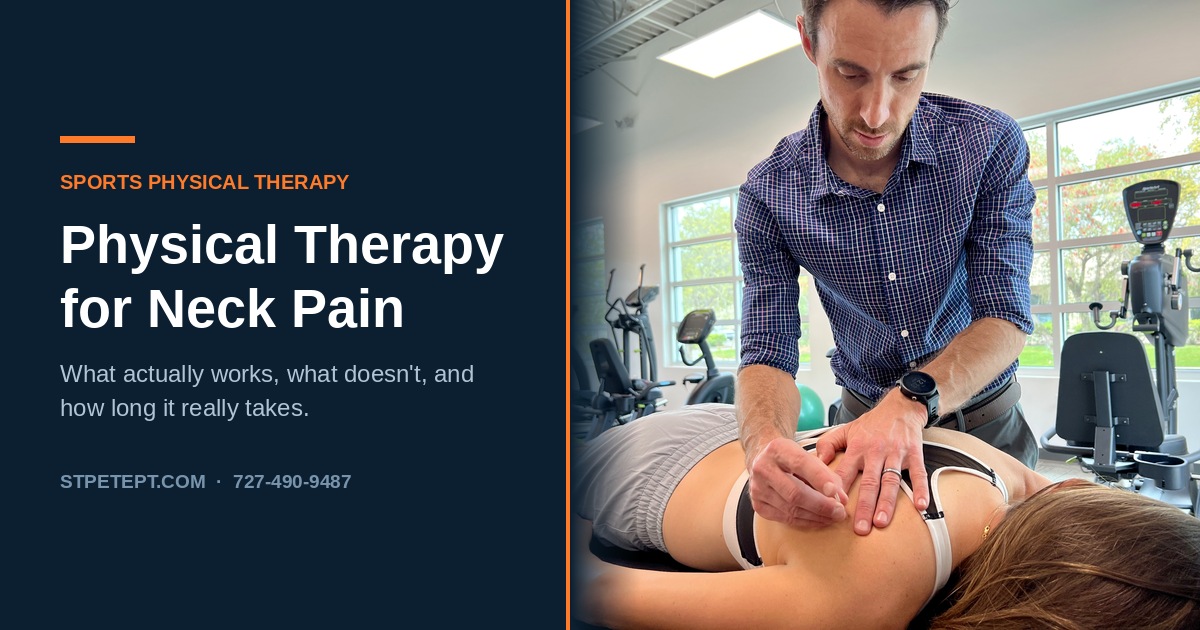
Dry needling is a highly effective technique for athletes with neck pain and nerve irritation. By targeting trigger points and tight muscles, dry needling improves blood flow, reduces pain and muscle tension, and restores normal movement patterns—helping athletes return to play faster.
3. Targeted Mobility Exercises
Controlled exercises restore neck range of motion without aggravating symptoms—essential for athletes needing full mobility for performance.
4. Nerve Gliding Techniques
Also called nerve flossing, these movements improve nerve mobility and reduce sensitivity, helping athletes regain function faster.
5. Strengthening and Stabilization
We focus on building neck and upper back strength to maintain spinal alignment and prevent future injuries—critical for collision and overhead athletes.
Lifestyle and Training Recommendations for Athletes
- Modify Training Loads
Reduce high-impact drills and overhead movements until cleared by your therapist. - Optimize Sleep Position
Use a firm pillow that keeps your neck in a neutral position to avoid extra strain. - Screen Time Awareness
Avoid prolonged downward gaze at phones or screens—keep devices at eye level. - Warm-Up and Cool-Down
Incorporate dynamic warm-ups and gentle mobility drills before and after training. - Stay Hydrated and Maintain Recovery Nutrition
Proper hydration and nutrition support tissue healing and reduce inflammation.
Consistency with these strategies accelerates healing and reduces reinjury risk.
Don’t Wait—Early Treatment Matters
The sooner you start sports physical therapy, the faster you can return to your game. At St. Pete Physical Therapy, we combine evidence-based care with athlete-specific rehab to restore movement, reduce pain, and prevent future issues.
Ready to Get Back in the Game?
If neck pain, numbness, or tingling is holding you back, contact St. Pete Physical Therapy today. Our team is ready to help you recover and return to peak performance with a personalized plan.