Sports Physical Therapy for Stability, Strength, and Return to Sport
Shoulder dislocation treatment is essential for athletes and active adults who want to restore stability, prevent re-injury, and regain full function. A shoulder dislocation occurs when the ball of the upper arm bone is forced out of its socket—often during contact sports, falls, or overhead activity. Without proper sports physical therapy, the shoulder can remain weak and unstable, increasing the risk of repeated dislocations and long-term performance limitations.
At St. Pete Physical Therapy, we specialize in sports physical therapy–driven shoulder dislocation treatment for athletes in St. Petersburg, FL. Our goal is not just to reduce pain, but to rebuild the shoulder so it can handle real athletic demands.
Shoulder Dislocation Treatment for Athletes in St. Petersburg, FL
A shoulder dislocation impacts more than just the joint itself. It can disrupt strength, coordination, confidence, and overall athletic performance. Common symptoms following a dislocation include:
- Sudden and intense shoulder pain
- Visible deformity or change in shoulder shape
- Swelling and bruising
- Difficulty lifting, throwing, or rotating the arm
- A feeling of looseness or instability
Many athletes hesitate to return to sport after a dislocation, worried the shoulder may “pop out” again. Relying on rest alone can lead to stiffness, weakness, and poor joint control—making repeat injuries more likely.
Effective shoulder dislocation treatment requires structured sports rehabilitation, not just time off.
Why Shoulder Dislocation Treatment Is Critical After Injury
After a shoulder dislocation, the ligaments and joint capsule that stabilize the shoulder are often overstretched or torn. This is especially problematic for younger athletes and overhead or contact sport athletes, where instability can quickly become a recurring issue.
Sports physical therapy addresses:
- Loss of joint control
- Weakness in the rotator cuff and scapular muscles
- Poor movement mechanics
- Delayed reaction time during athletic movements
Without proper rehab, athletes are at a much higher risk for repeat dislocations and chronic shoulder instability.
Sports Physical Therapy for Shoulder Dislocation Treatment
At St. Pete Physical Therapy, our shoulder dislocation treatment plans are customized to the athlete, the sport, and the level of activity.
Initial Phase: Pain Control and Protection
Early treatment focuses on protecting healing tissue and calming inflammation. This may include:
- Short-term sling use if needed
- Manual therapy to reduce swelling and pain
- Gentle, controlled movements to prevent stiffness
Restoring Mobility After a Shoulder Dislocation
As pain improves, therapy progresses to restoring full, safe range of motion. Controlled mobility work allows the shoulder to move freely without placing it at risk.
Strengthening the Shoulder to Prevent Re-Injury
This is where sports physical therapy truly makes the difference. Treatment focuses on:
- Rotator cuff strengthening
- Scapular (shoulder blade) stability
- Core and kinetic chain control
- Neuromuscular training to improve shoulder awareness
These components are critical for throwing, lifting, swimming, and contact sports.
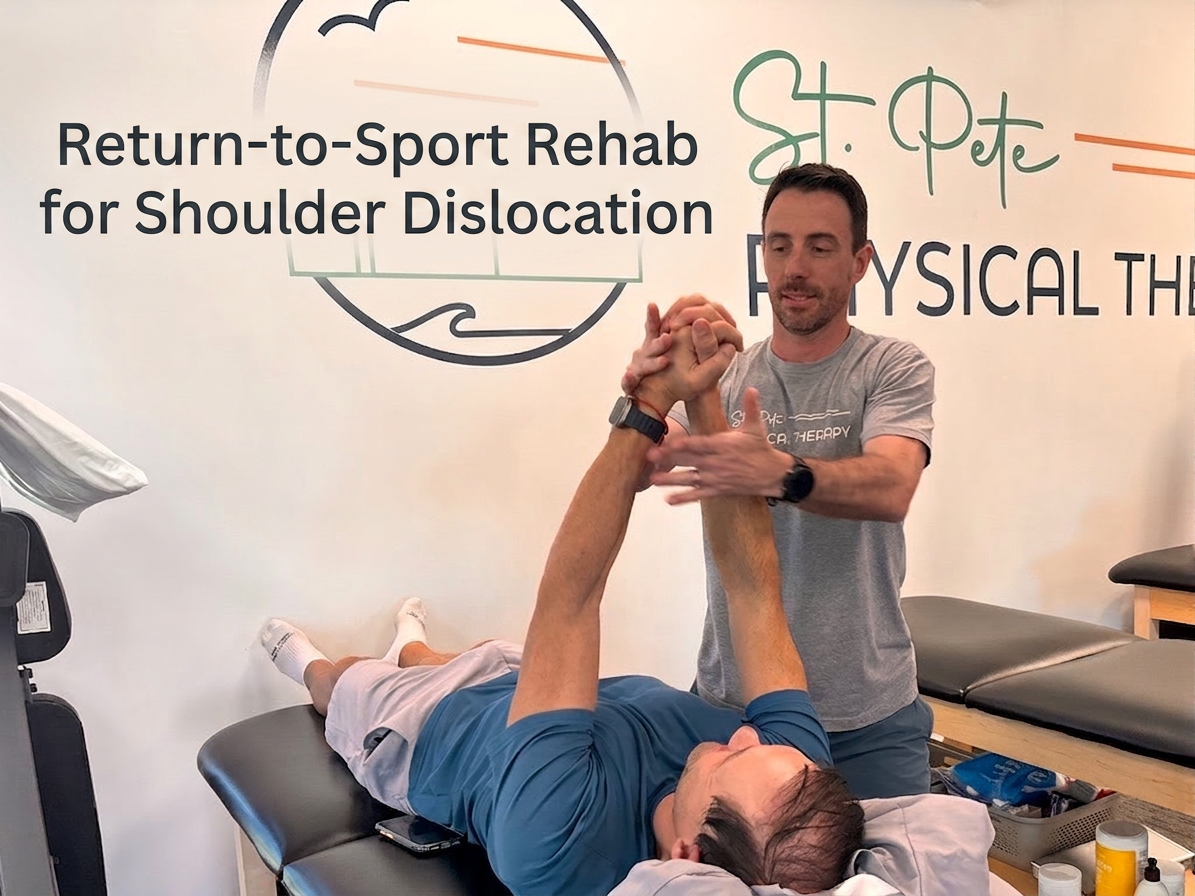
Return-to-Sport Training After Shoulder Dislocation
As strength and stability improve, rehab advances to sport-specific movement:
- Overhead lifting and throwing mechanics
- Dynamic stability and plyometric drills
- Gradual exposure to sport demands
The goal is to ensure the shoulder can tolerate real-world stress—not just daily activity.
Restore Stability and Confidence After a Shoulder Dislocation
A shoulder dislocation can leave the joint feeling unpredictable and unreliable. With targeted shoulder dislocation treatment, athletes can restore stability through progressive rehab, strategic strengthening, and expert sports physical therapy care. This approach not only helps prevent re-injury, but also allows athletes to return to training and competition with confidence.
At-Home Tips to Support Shoulder Dislocation Treatment
Alongside in-clinic therapy, athletes can support recovery by:
- Icing the shoulder during the first 48 hours if swelling is present
- Avoiding early overhead or heavy lifting
- Maintaining good posture during sitting and training
- Performing prescribed home exercises consistently
- Sleeping in positions that reduce shoulder strain
Even when pain fades, returning to sport too quickly can lead to setbacks. A structured plan matters.
Why Athletes Choose St. Pete Physical Therapy
At St. Pete Physical Therapy, we understand the demands athletes place on their shoulders. Our sports physical therapy approach to shoulder dislocation treatment focuses on performance, injury prevention, and long-term joint health.
Whether your dislocation is recent or recurring, our team helps athletes in St. Petersburg, FL return stronger, more stable, and more confident.
Schedule Your Shoulder Dislocation Evaluation Today
If you’ve experienced a shoulder dislocation or ongoing instability, don’t leave your recovery to chance.
Contact St. Pete Physical Therapy today to schedule your evaluation and start your personalized sports rehab program.