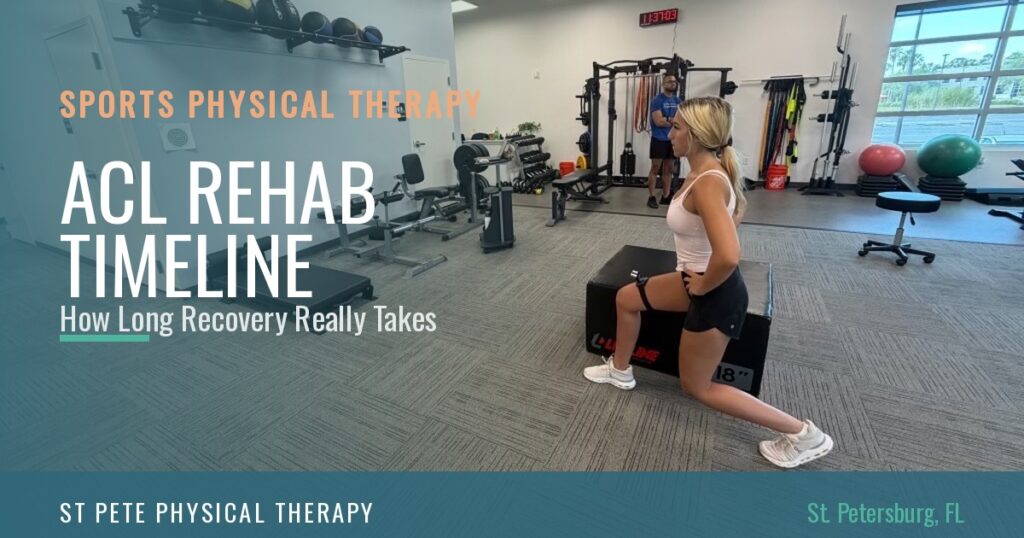
You felt the pop. Maybe you heard it. The knee swelled within an hour, and now you’re staring down months on the sidelines wondering one thing: how long until I’m back? That question is what an ACL rehab timeline is built to answer — and the honest version has fewer fixed dates and more checkpoints than most people expect.
Here’s what recovery actually looks like, phase by phase, including when you can run again and the tests that clear you to return to your sport. No fluff, no guarantees — just the real road.
What an ACL tear does to your knee
The ACL (anterior cruciate ligament) connects your thigh bone to your shin bone and keeps your knee from sliding and twisting out of control. It’s the ligament that lets you cut, pivot, and land.
When it tears — usually from a sudden change of direction or an awkward landing, not contact — you get the classic combo: a pop, fast swelling, and a knee that feels like it might buckle. That “giving way” feeling is the ACL telling you it can no longer stabilize rotation.
The ACL rehab timeline, phase by phase
Recovery runs in stages, not on a calendar. However, most athletes move through them in a predictable order whether or not they have surgery.
Phase 1: Calm it down (weeks 0–2)
The first job isn’t strength. It’s getting the swelling down and the knee straight. Full extension early is the single most important goal of this phase — lose it now and you’ll fight for it for months.
You’ll work on quad activation (getting the thigh muscle firing again), gentle range of motion, and normal walking. It’s unglamorous and it matters more than anything you’ll do later.
Phase 2: Rebuild the base (weeks 2–12)
Once the knee moves freely and swelling stays down, the focus shifts to strength. You’ll load the quads, hamstrings, glutes, and hips, then progress from two-leg to single-leg work. Additionally, you’ll retrain balance and control so the knee reacts correctly when the ground shifts.
Symmetry is the theme: the goal is a surgical leg that works as hard as the healthy one.
Phase 3: Learn to run again (months 4–6)
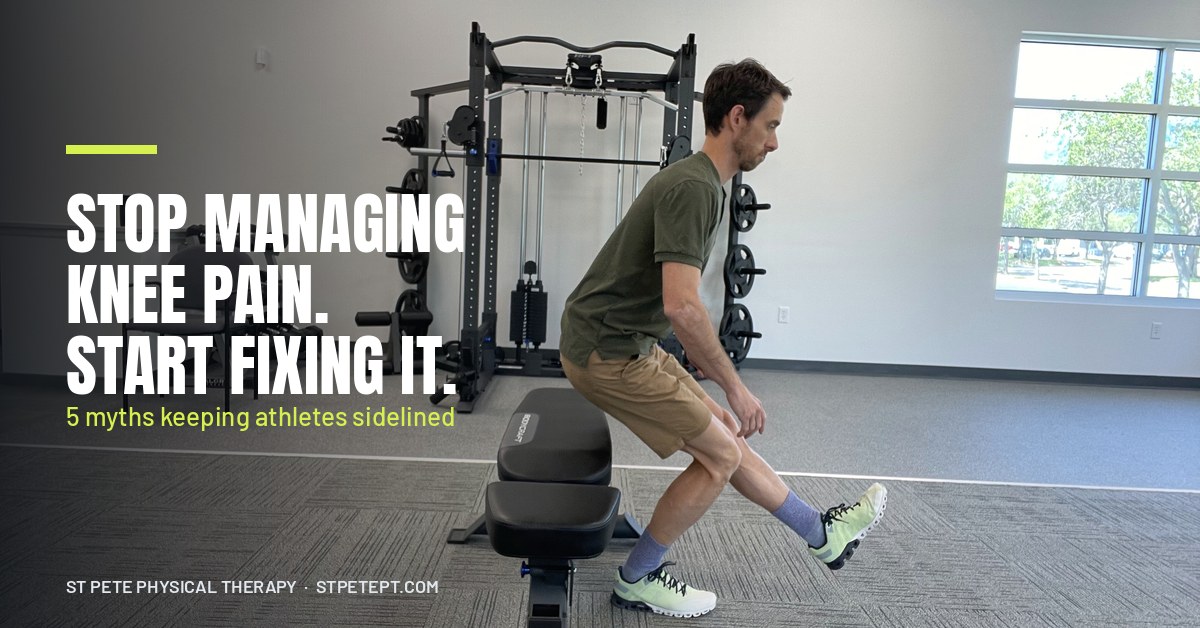
Running isn’t a date on the calendar — it’s a reward you earn. Before you jog, we want to see minimal swelling, near-full quad strength, and clean single-leg control. For example, if you can’t do a controlled single-leg squat without your knee caving inward, you’re not ready to pound the pavement.
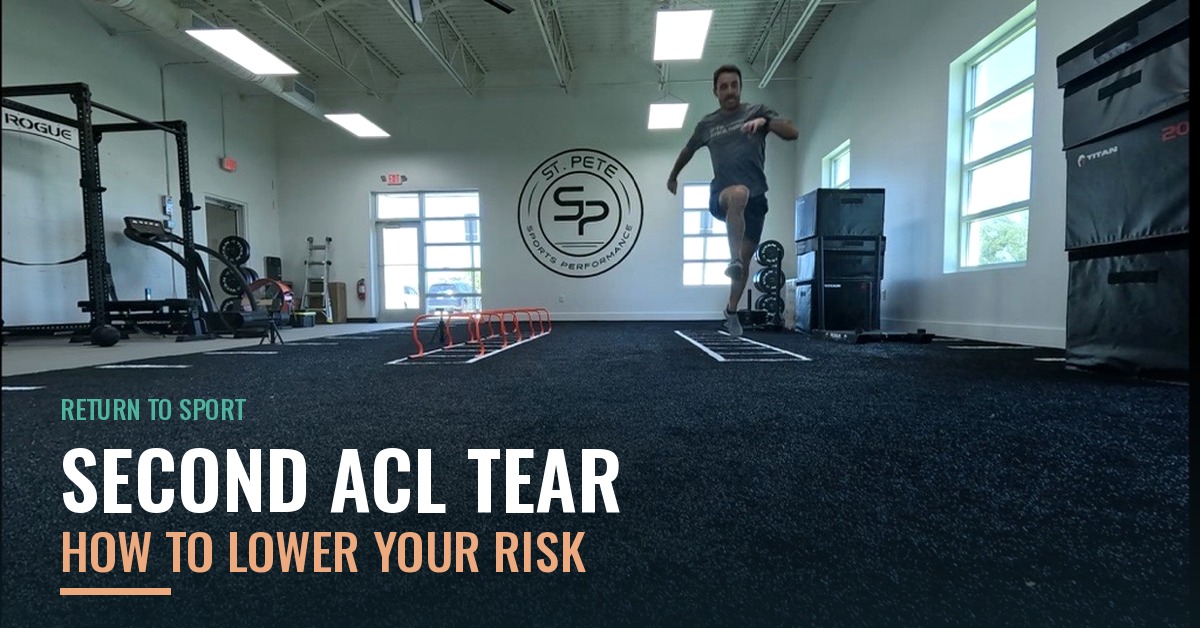
Plyometrics — jumping and landing drills — get introduced here, low and controlled first.
Phase 4: Return to sport (months 6–12)
This is where the real testing happens. Cutting, sprinting, and sport-specific drills build back the movements your sport demands. Then we test whether the knee can actually handle them.
The tests that clear you to play
“Feeling good” is not a return-to-sport criterion. As a result, we lean on objective testing before anyone goes back to competition. The common benchmarks include:
- Single-leg hop tests — hopping for distance and time on each leg, comparing sides
- Limb symmetry — the surgical leg producing at least 90% of the healthy leg’s strength and hop distance
- Quad strength — because the quad is the muscle that protects the knee on landing
- Psychological readiness — trusting the knee is part of being ready, not a soft factor
The research is clear that returning before you pass these tests raises your reinjury risk. One large study found reinjury rates dropped sharply for athletes who delayed return to sport until around nine months and met strength criteria first. That’s why we chase criteria, not the calendar. You can read more on ACL injuries and recovery from the AAOS OrthoInfo library.
Surgery or not — the timeline still applies
Not every ACL tear needs reconstruction. Some people — often those in lower-demand activities, or “copers” whose knees stay stable — do well with rehab alone. In contrast, athletes returning to cutting and pivoting sports more often choose surgery.
Either way, the rehab does the heavy lifting. Surgery replaces the ligament; it doesn’t rebuild your strength, control, or confidence. That part is earned in the gym over months.
The mistake we see most often
The most common misstep isn’t laziness — it’s rushing. Around the six-month mark, the knee feels great, the athlete feels ready, and the calendar says “half a year.” So they go back.
Then they land on it wrong. A knee that feels ready and a knee that tests ready are two different things, and the gap between them is where second injuries happen. We see it every season with high school and college athletes across St. Petersburg and Tampa Bay. Passing the tests is what keeps you on the field instead of back in the clinic.
The bottom line
- ACL recovery runs in phases, not on fixed dates — expect roughly 9–12 months to return to sport, longer for high-demand athletes
- Full knee extension early and quad strength throughout are the foundation
- You return when you pass objective testing, not when the calendar says so
- Rushing back before you’re cleared is the fastest way to a second tear
A good ACL rehab timeline is honest about the work and clear about the checkpoints. If you’re recovering from an ACL tear and want a plan built around getting you back to your sport safely, our sports physical therapists can guide every phase. Book an evaluation at St Pete Physical Therapy — stpetept.com or 727-222-5619 — and let’s map out your road back.